
Co-organised by IFOAM Organics Europe, the Hungarian Research Institute of Organic Agriculture (ÖMKi) and the Hungarian Ministry of Agriculture, the 18th edition of the European Organic Congress (EOC 2024) took place from 10-12 September in Budapest, coinciding with the Hungarian Presidency of the Council of the European Union. At a crucial social and political moment, which has the potential to profoundly influence the organic movement, multiple actors from the sector gathered at the Vigadó Concert Hall to share practices and build bridges between generations, farmers, supply chain actors, researchers and policy makers at different levels.
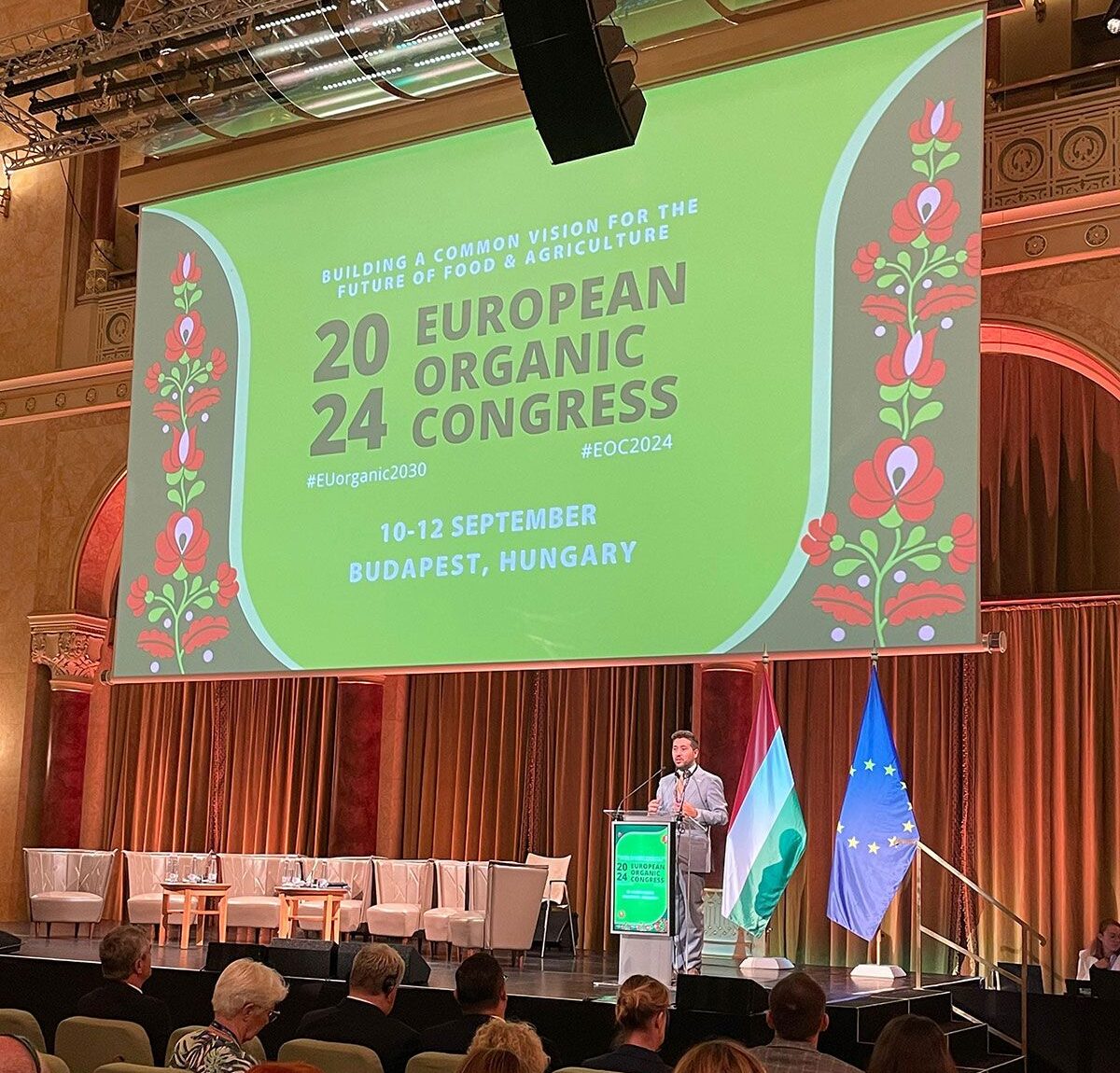
Building a common vision for the future of organic food & agriculture
“We have put together 270 people participating from all over Europe in a very timely moment. Just last week, the European Commission published the report of the Strategic Dialogue, which will be one of the main political outcomes of this new mandate in the task to put together 29 different stakeholders and make them agree on a shared vision for the future of food and farming in Europe. We had the chance to discuss it on the first day with policymakers, the President of the Hungarian Ministry of Agriculture, the Secretary of State from Poland, and high-level of people from the Commission. We had the possibility to discuss with policymakers, but also with some of the other stakeholders, such as the representative of conventional farmers and representative of young farmers”, explained Eduardo Cuoco, Director of IFOAM Organics Europe. He added: “This shows that the exercise that started seven months ago by President Ursula von der Leyen really helped to depolarize the discussion about the future of food and farming. We are happy that the first public occasion to discuss it was our Congress, with our delegates. The public was very engaged in the discussion”.
“Very current developments are being discussed at this conference, including how to shape the new Common Agricultural Policy for the next term after 2027, which is a hot topic. Many new debates and exciting conversations can start here. I believe the powerful message of this Congress is that we must speak with each other and join forces to build a better, sustainable future. We cannot afford to be divided. One major benefit of the dialogue process is that all the stakeholders were involved, got to know each other personally, as well as each other’s arguments, and could reach a good consensus. And this is a very big step forward. We have to lead the change together to achieve a transition to more sustainable food systems and agriculture. That’s the main message, and I hope it will continue after the conference, as well. I’m really satisfied with the attendance and the level of interest from participants,” said Dr. Dóra Drexler, Vice-President of IFOAM Organics Europe and Managing Director of ÖMKI.
Policy, trade opportunities and the evolving landscape of international trade in organic products
While the first day was really devoted to policy and the opportunities that the new CAP could bring, the second day focused on market data, trade opportunities and barriers in international organic markets, promotion and communication strategies, as well as patents, organic plant breeding and NGT deregulation.
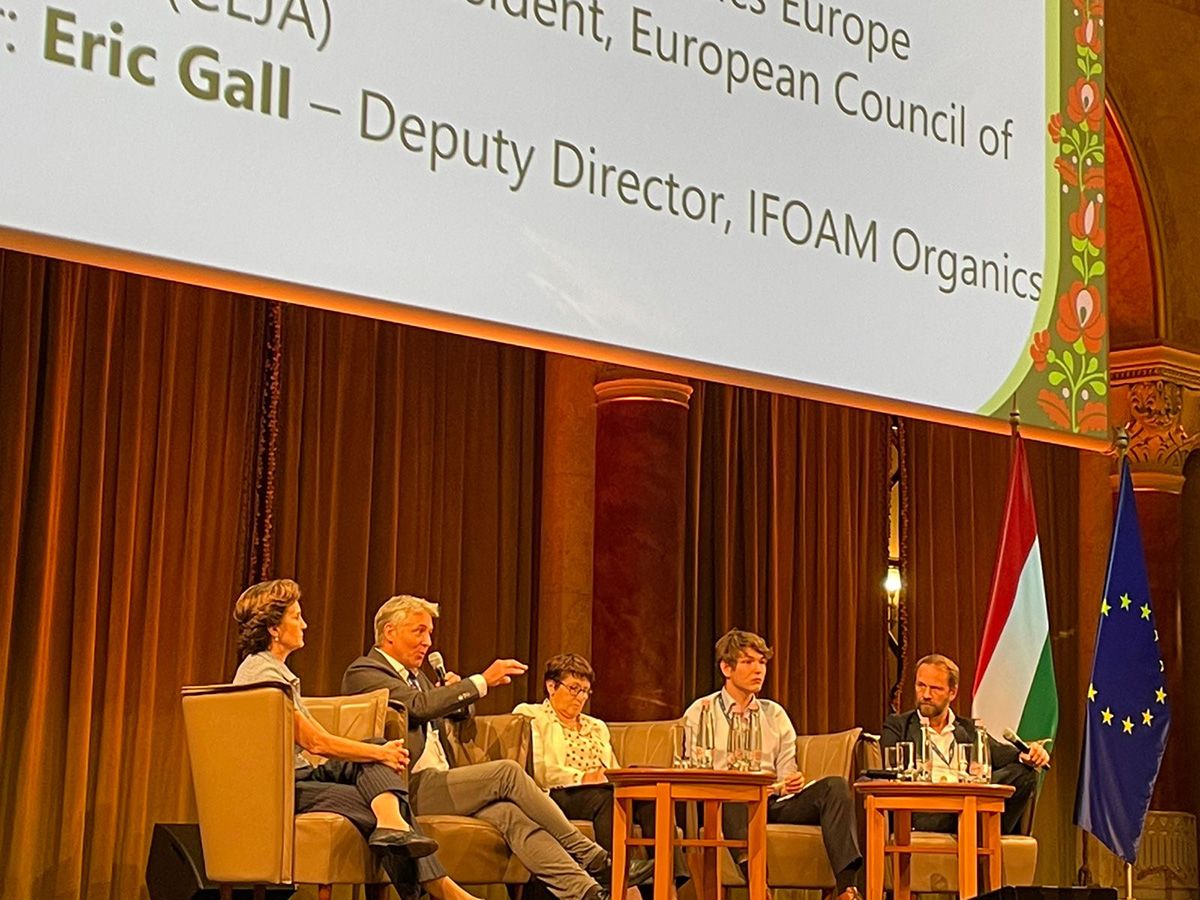
The EOC also looked into fresh and innovative approaches to communicate about and increase the visibility of organic agriculture and products, by making use of innovative and fresh approaches. “The conversion to organic is a long way to go. In the absence of political reaction, organic production has declined”, Frédéric Faure, Vice-President of Biocoop highlighted to Bio Eco Actual. “Retailers have two very important responsibilities, because we are a point between farmers and consumers. The first is to support a real good share of the value. The second is the message we give to citizens. It is very important and full of responsibility”, he added.
This was followed by the panel session: “Patents and NGT deregulation – What’s at stake for the European breeding sector?” which delved into the issue of intellectual property rights and patents on genetic material in connection to the new legislative proposal/framework on ‘New Genomic Techniques’ and implications for the European organic breeding sector.
Commenting on this, Johanna Eckhardt, Project Coordinator of No Patents on Seeds! pointed out: “What we can see in the current practice of the European Patent Office is that many companies use this trick of including descriptions about NGT in their patent claims even though the patent is just based on traditional breeding, and it’s getting more and more difficult for breeders who want to use traditional varieties to do so. I was very grateful that we had the opportunity today to talk about this issue and hopefully gather co-operators who can support the common goal that we all have, and to present our interest as well at the current discussions at the European level, which could be easily done. We could either change the implementing regulation at the level of the European Patent Convention. There we have representatives from 39 states. It would need one country to take the initiative and propose concrete change in the implementing regulation and then the support of the other contracting states. And it would be very important as well for the organic sector to approach their representatives and make sure that they know that this really is becoming a threat to organic breeding and traditional breeding, in general.”
After high-level breakout sessions focused on innovation, power in the production chain and building climate resilience, the Congress closed with a session exploring the EU Organic Regulation and its role in organic’s future. The event ended on Thursday 12 September with a fully attended excursion.
Author: Ariadna Coma, Journalist.
Subscribe to Bio Eco Actual Newsletter and be up to date with the latest news from the Organic Sector
Bio Eco Actual, International Organic Newspaper
Read Bio Eco Actual