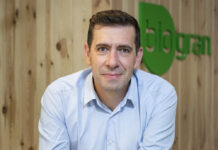

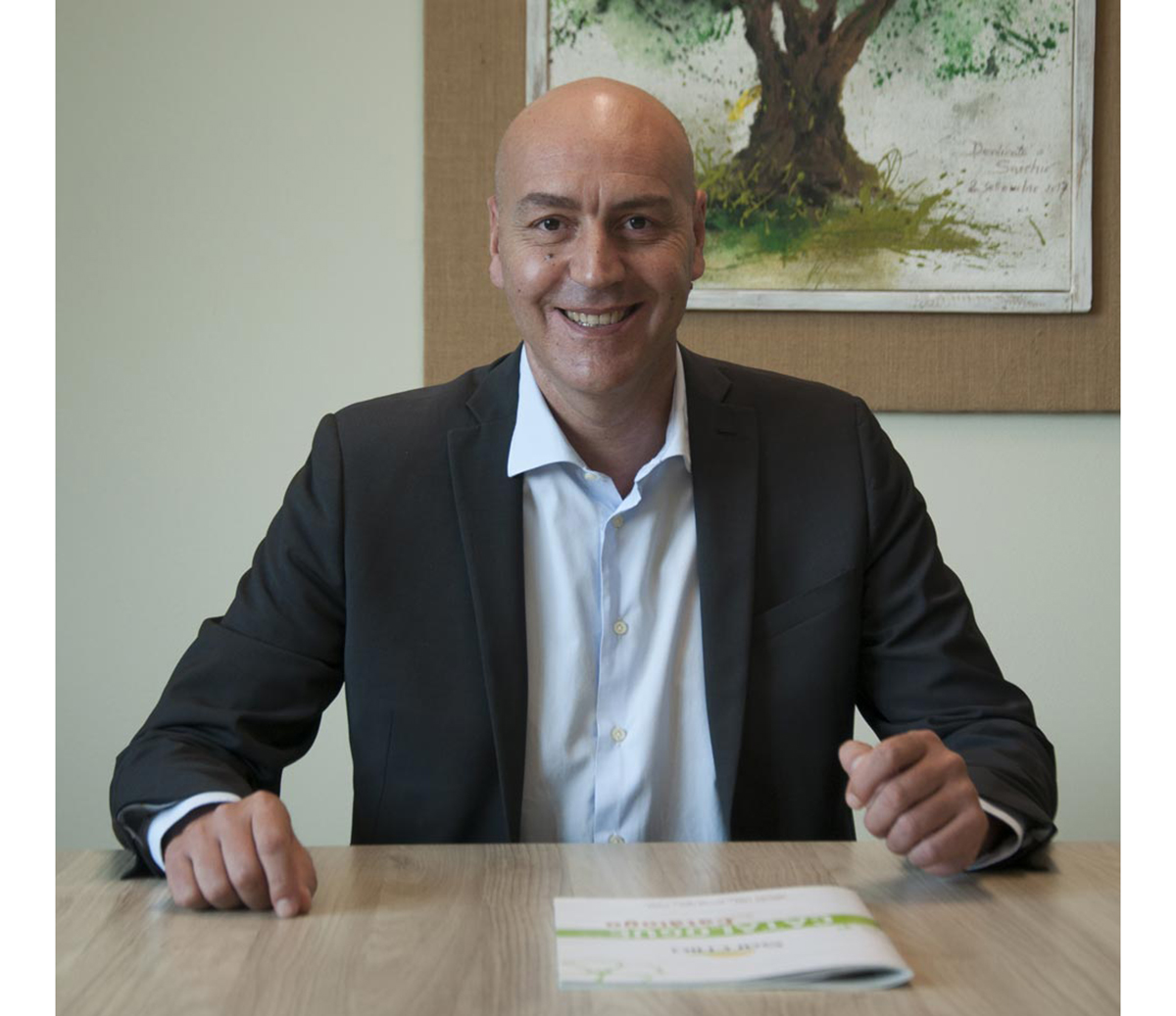
Cesare Roberto was born in Foggia (Puglia) in 1968. He is the President of Sarchio, a leading Italian company based in Carpi (Modena) specialized in the production of organic and gluten-free food. With his leadership, Sarchio -a name that comes from the company’s relationship with the territory and refers to an agricultural tool of the peasant tradition, the weeder- has become a reference in organic and gluten-free production in Italy and Europe. Its management is characterized by quality, innovation and loyalty to Italian culinary traditions.
Sarchio was founded in 1982 and is a pioneer in the development of organic farming in Italy. Why was it created and what was the company like in its origins?
The natural product was on everyone’s mind. It was a very open concept, which was not defined. Everyone talked about natural produce but its specific meaning was not well understood. Over time, we started to talk about organic farming. You have to respect clear regulations to define yourself as organic, and this was a very attractive way for us. We started to change all the items we produced and traded to certified organic products.
When did you join Sarchio and what was your motivation? How has your career in the company and the company itself evolved?
I started in 1989 as a salesman. As I said, the word organic did not exist, and people did not understand what an organic product was, but this contact with people and with organic products opened my mind and vision. That’s how I started working at Sarchio. At the beginning, I joined as an employee and also with a small share in the company. At the beginning we were four partners, and between 1989 and 2014, I ended up acquiring 100% of the company. In the meantime, we transformed a trading company into a manufacturer of organic products.
For me, there is nothing more sustainable than organic farming and this is the right way to respect the environment, food and above all not to put poison on the table. I think this is something that everyone should keep in mind, because even if the consumption of certain products can be regulated, it is better to avoid the risks.
What do you think about the fact that the demand for gluten-free products has grown in recent years, even among people without intolerance or coeliac disease?
In the last 25 years, we have seen an increase in food intolerances. It is not that they did not exist before, but they were not sought out as frequently as they are today. Coeliac disease is a condition that can only be treated by an appropriate diet, where gluten is not present.
Today, we have worked and improved in this area. A product with the gluten-free label is not only made for people with coeliac disease, but for everyone, even if it can be consumed by people with coeliac disease. Why do many people who do not have coeliac disease eat gluten-free food? They do so because of a question of digestion and because, over time, we have developed gluten-free products that are organic, low in sugar and fat, suitable for people who are careful with their diet.
Gluten-free products often contain more sugar and fat to compensate for the lack of gluten. Is this the case with Sarchio?
Not at all. We are working to avoid that. Statistically, many people with coeliac disease are also diabetic, so it is important that the gluten-free product does not contain sugar either. Therefore, we have developed several products, being the first biscuit in Italy and Spain that is organic, gluten-free and sugar-free.
What role do ethical values play in the daily management of Sarchio, and how does the company ensure that they benefit both consumers and farmers?
All our partners have to work sustainably. In other words, they must ensure that people in agriculture work under clear and fair conditions. In addition, we have worked in-house to reduce energy consumption, implementing solutions to generate our own energy and using sustainable materials for packaging, such as biodegradable plastics. We have also collaborated in reforestation projects, such as planting 450 trees in Rome. We are committed to continuing to develop projects that help to rebalance the planet.
Author: Oriol Urrutia, Co-Editor
Subscribe to Bio Eco Actual Newsletter and be up to date with the latest news from the Organic Sector
Bio Eco Actual, International Organic Newspaper
Read Bio Eco Actual