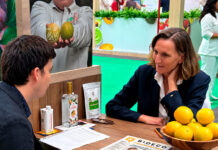


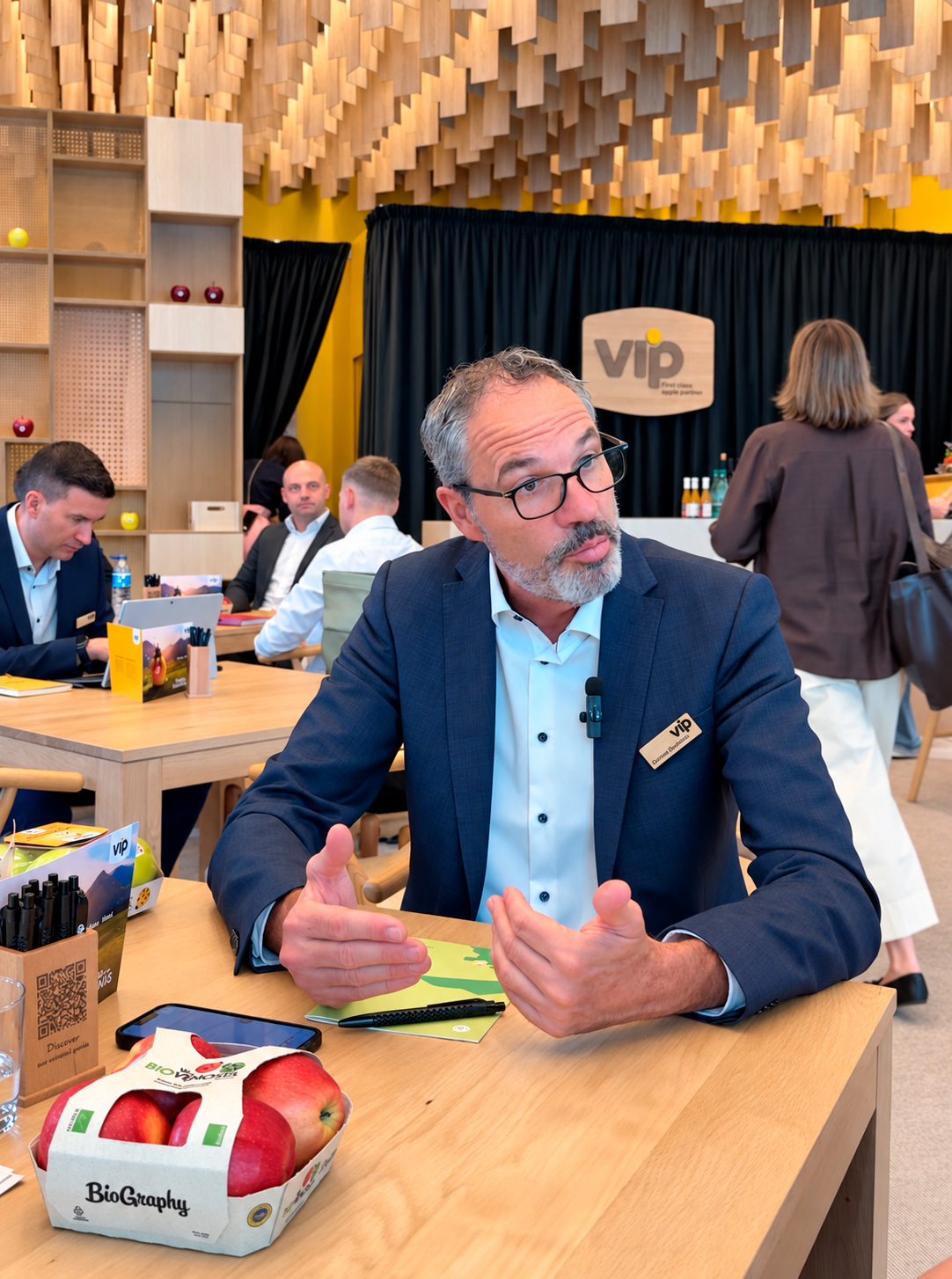
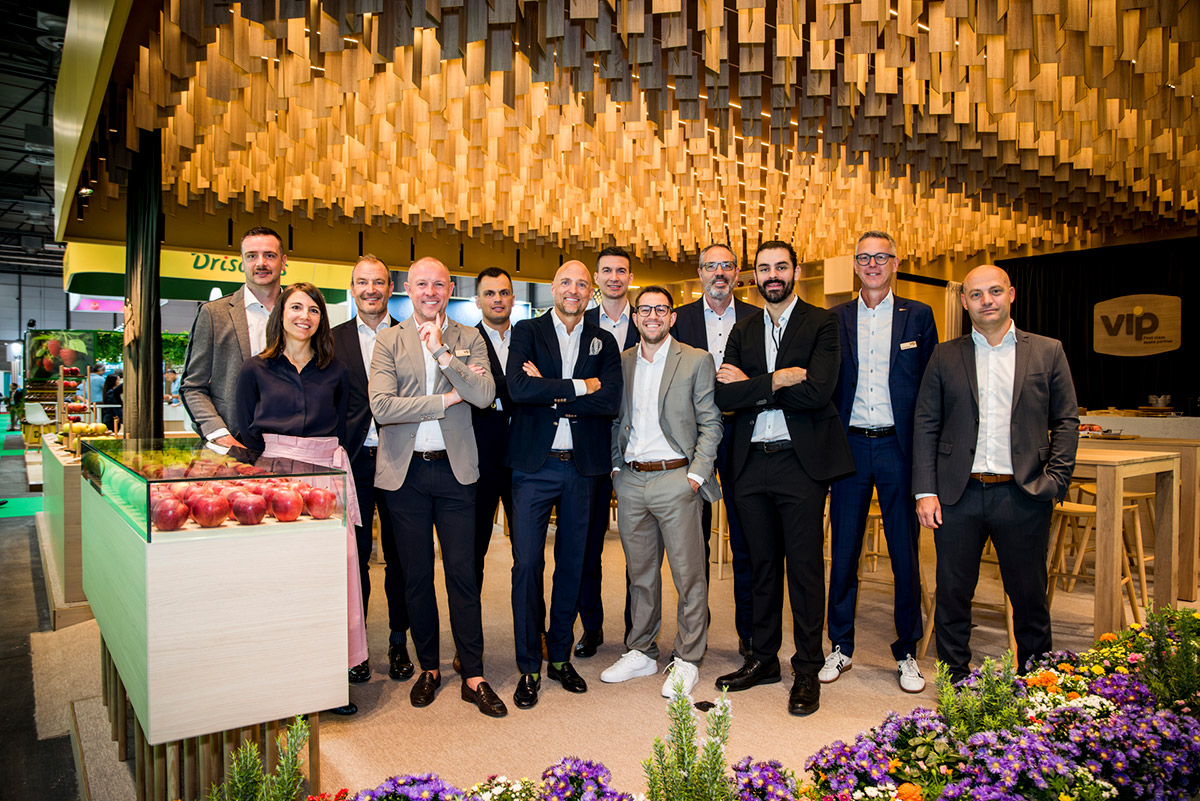
After a season of abundant supply and pressure on prices, VIP is approaching 2026/27 with continuity of supply and communication about origin among its priorities. In this interview, conducted at Fruit Attraction 2026, Gerhard Eberhöfer, product manager for organic varieties at the Val Venosta association of cooperatives, discusses markets, varieties and ways to bring growers’ work closer to consumers.
What made the 2025/26 season particularly difficult, and how did it turn out for organic growers?
We had a very large harvest with excellent quality. But many other European regions also had good crops, and we found ourselves with more supply than demand. That increased competition and put pressure on prices.
Our longstanding customers maintained a substantial share of their purchases, but we had to find outlets for other volumes. In the end, the result for growers was acceptable, although it was not a great season financially. Higher everyday expenses also reduced the money many consumers had available for food.
Which markets did you redirect those volumes to?
We have been present in almost every European country for a long time. What we did was send more fruit to other markets, because Germany and Switzerland also had very large harvests and needed fewer apples from Val Venosta.
We sold more in the UK, northern Europe and Spain. Italy also grew: it normally accounts for around 20-22% of our organic sales volumes, and last season that reached approximately 27%.
Did that growth in Italy come through specialist retailers or supermarkets?
Both. We have worked with specialist retailers for many years and increased volumes, including new varieties. We have organised in-store tastings and other marketing activities with our partners. At the same time, we grew with supermarkets.
There is also another important channel in Italy: schools, nurseries and hospitals. Institutional catering is a significant market for organic food.
How are you responding to heat and managing water in Val Venosta?
The summer of 2026 was very warm here too, but we still have the advantage of altitude. We grow apples between 500 and 1,100 metres above sea level, in a mountain region with substantial differences between daytime and night-time temperatures.
We have a very dry climate and water from the mountains. Even so, we have to use it carefully. Having water available does not mean we can stop paying attention to how we use it and to the sustainability of our region.
What role do new varieties play in your organic range?
Traditional varieties, such as Golden Delicious, Gala, Pinova, Braeburn and Red Delicious, still represent approximately half of our organic production. Alongside them, we have scab-resistant varieties such as Bonita, Topaz and Natyra, which help reduce the need for treatments. Organic growing also requires treatments, using products permitted in organic production.
We also work with varieties such as Ambrosia, Kanzi and Cosmic Crisp, which is performing very well. We are looking for flavours that appeal to younger generations too, with a good balance between sweetness and acidity.
What does it take to guarantee organic apples throughout the twelve months of the year?
You have to guarantee quality, certification and origin, but also availability. In autumn, after harvest, many operators can offer good fruit. The big challenge is guaranteeing availability and quality all year round.
For that, we need different varieties, good storage and the capacity to respond. Our major partners need several lorries every week. We have a dedicated organic packing centre with twelve lines, allowing us to prepare the formats the market requests, including small packs of four, six or eight apples.

How do you support growers with new varieties and challenges in the orchard?
We are organised as an association of cooperatives. Growers should concentrate on doing their job well in the orchard, while the cooperatives and VIP take care of storage, grading, sales and marketing. We also follow market requirements and new varieties emerging in other countries.
Before introducing a variety, four, five or six years of trials may be needed, both in production and in storage. Success in another region does not guarantee the same result in the Alps. We also have experimental support and quality teams that visit orchards, identify problems and provide guidance to growers.
How do you communicate the work and the story behind an organic apple to consumers?
You have to go into shops and talk to consumers. Organic consumers tend to be more interested in where the product comes from, how it is grown and the family behind it. That is why we organise tastings and other activities at the point of sale.
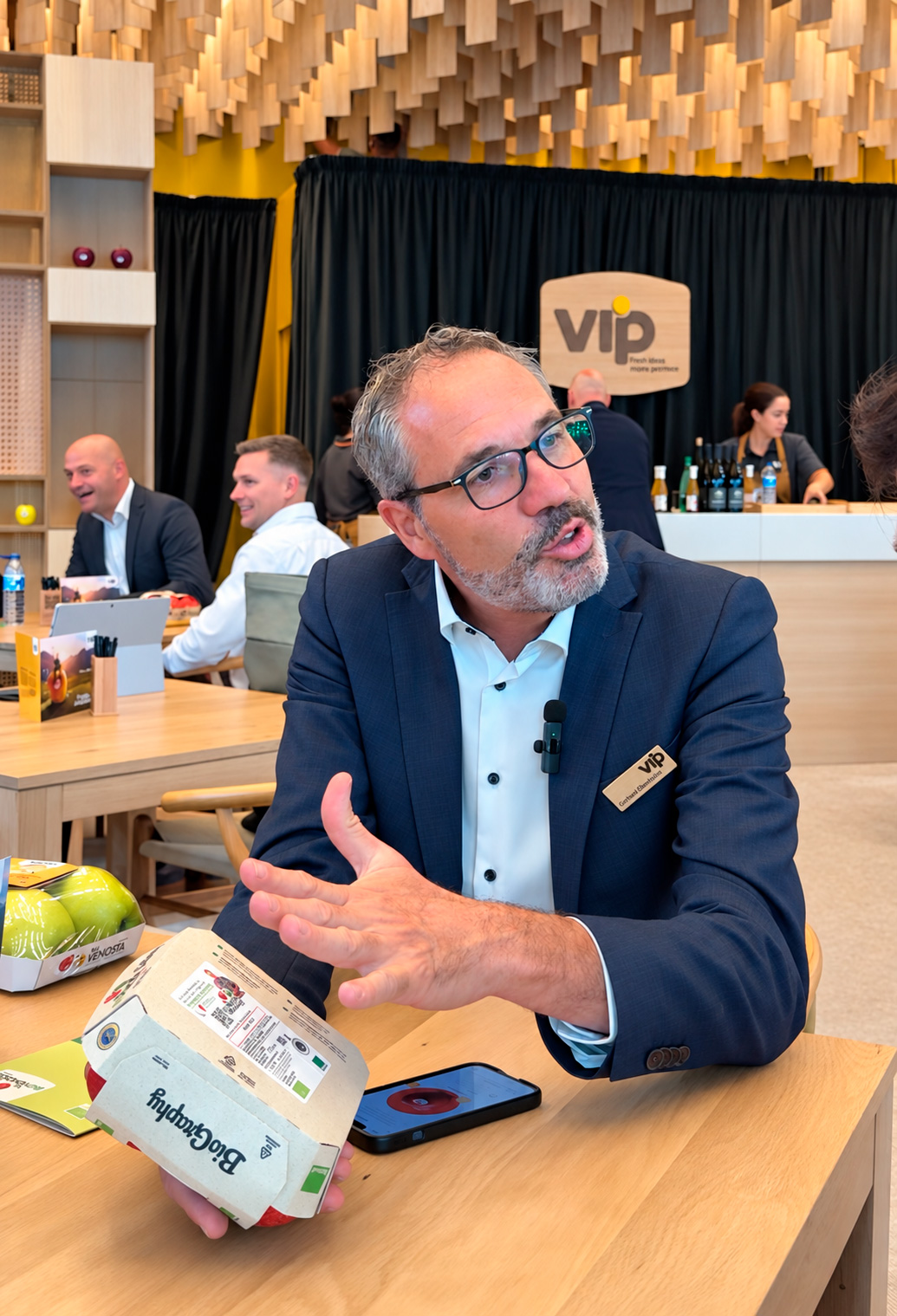
With BioGraphy, we can connect the pack to the grower through their name and a QR code. Consumers can discover their story, locate their farm and see which varieties they grow. It brings growers closer to people buying our apples many kilometres away from Val Venosta.
We also offer this possibility to supermarkets working with their own brands: they can include the QR code and origin information. It does not have to be limited to packs carrying our brand.
What are your expectations for the 2026/27 season?
I am optimistic. Val Venosta’s altitude and climate have allowed us to produce volume and quality, including good keeping quality. I believe we can maintain supplies to the European market for twelve months.
Based on conversations I have had with other growing regions over recent weeks, I estimate that Europe could have 15-20% fewer organic apples available this year. In some regions, water shortages or high temperatures have reduced the fruit available for the fresh market. If demand increases, we have to be ready to respond. That is our job.
Author: Oriol Urrutia, Co-Editor and Political Scientist
Subscribe to Bio Eco Actual Newsletter and be up to date with the latest news from the Organic Sector
Bio Eco Actual, International Organic Trade Media
Read the Bio Eco Actual International Yearbook 2025 – Trends 2026