

On 16 July the European Commission presented its proposal for the future of the Multiannual Financial Framework (MFF), i.e. the budget of the EU post 2027, and for the next Common Agricultural Policy (CAP). After months of discussions and rumours in the EU bubble, the proposals and figures are finally there –for the most part.
What was only gossips in the last months is now confirmed: the CAP will be part of a bigger fund, the European Economic Territorial Social Rural and Maritime Sustainable Prosperity and Security Fund, with 865 billion allocated to it. This large Fund will include the CAP, the European Cohesion Fund, the European Social Fund, the Common Fisheries and the Internal Security Fund. With 5 overarching objectives, ranging from supporting the Union’s sustainable prosperity and quality of life but also the Union’s defence capabilities and security, the aspects covered by this Fund are going way beyond agriculture and rural development, leading to concerns from the agricultural community about competing priorities. Indeed, Member States will have to design National and Regional Partnership Plans (“the Plans”) explaining how they will allocate the money and what will be their priorities. The two-pillar structure of the CAP would disappear in this new framework.
President von der Leyen and Commissioner for Agriculture and Food Christophe Hansen highlight that the funding of the CAP is safeguarded: the proposal establishing the National and Regional Partnership Plans (not published yet) will ringfence €295,7 billion for “CAP income support” and €6 billion for the agricultural reserve fund. Out of these €295,7 billion, a certain amount will be allocated directly and solely to degressive area- based payments. The specific amount that will go to these payments per hectares is still unknown, but every Member States must create this degressive area-based payments in the range of 130 euros/hectares minimum to 240 euros/hectares maximum. Depending on the arbitration of the Member States, this could represent between 40 to 75% of the national share of the €295,7 billion. The remaining funds will go to all the other CAP interventions, ranging from payments for small farmers, payments for natural and other area specific constraints and agri-environmental and climate measures. This means there will be no ringfencing for agri- environmental and climate measures, unlike the Strategic Dialogue on the future of Food and Agriculture recommendation, that at least one third of the CAP budget should be dedicated to agri-environmental and climate instruments, including organic farming.
Without a specific budget allocated to the development of organic farming and delivering on environmental and climate ambition, the risk of backtracking is very high
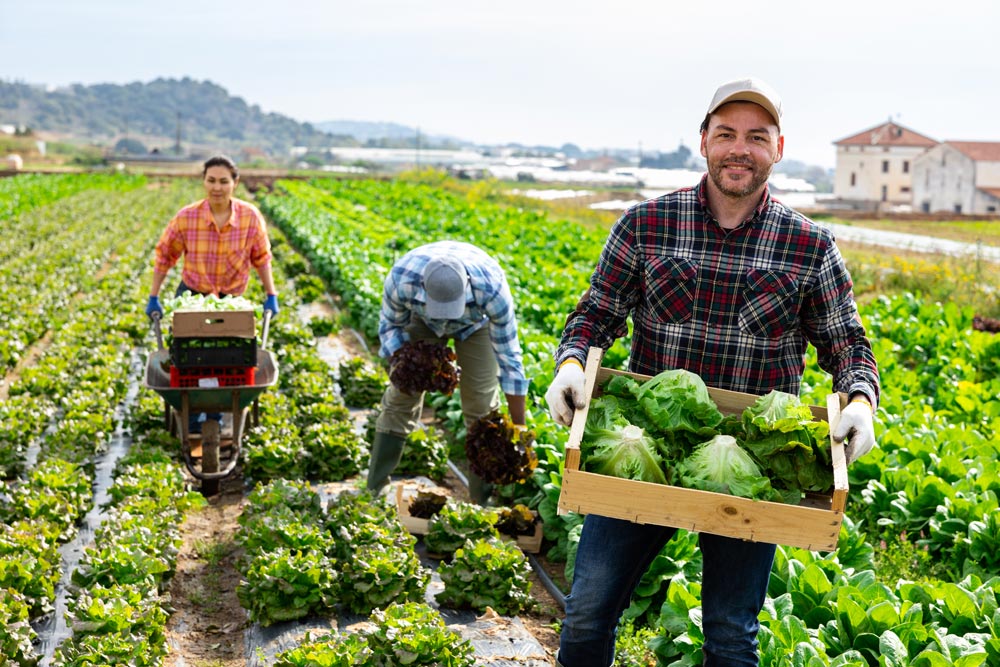
While the CAP proposal does recognize the role and benefits of organic farming by making its development a priority, the way this organic support will be implemented and the level of ambition behind it, is left up entirely to Member States. Without a specific budget allocated to the development of organic farming and delivering on environmental and climate ambition, the risk of backtracking is very high. Farmers will engage into sustainability if it is profitable, but for this they need a stable policy support that provides a long-term perspective and a level playing field across the EU. Therefore, the CAP proposal should ensure that sustainability pays off for farmers. Without a clear direction towards sustainability given by the EU budget and the CAP, there could be a race to the bottom among Member States.
At the opposite of this proposal, the European organic movement proposes a clear direction for the CAP. Indeed, the vision of the future of the CAP of the organic movement stresses that a transition to sustainable agri-food systems is necessary, and that there are solutions that work for farmers, nature and society. To achieve this, the CAP needs an ambitious reform to enable an agroecological transition of Europe’s agriculture, while:
- Supporting all farmers who want to transform their farms sustainably using a whole farm approach;
- Adequately rewarding farmers engaged in sustainability systems, such as organic farmers, for the benefits they already deliver to the environment and society;
- Ensuring the sector’s competitiveness.
In its vision, the organic movement proposes a clear separation between the income support, re-designed as socio-economic measures targeted for farmers who need it the most and the funding for agri-environmental measures. These latter would be restructured based on a three-stage approach to ensure proportionality between a farm’s level of environmental ambition and the funding it receives. The stages are determined using four key areas: soil protection, impact on water, climate, and biodiversity, with organic in top, for its positive contribution to these areas.
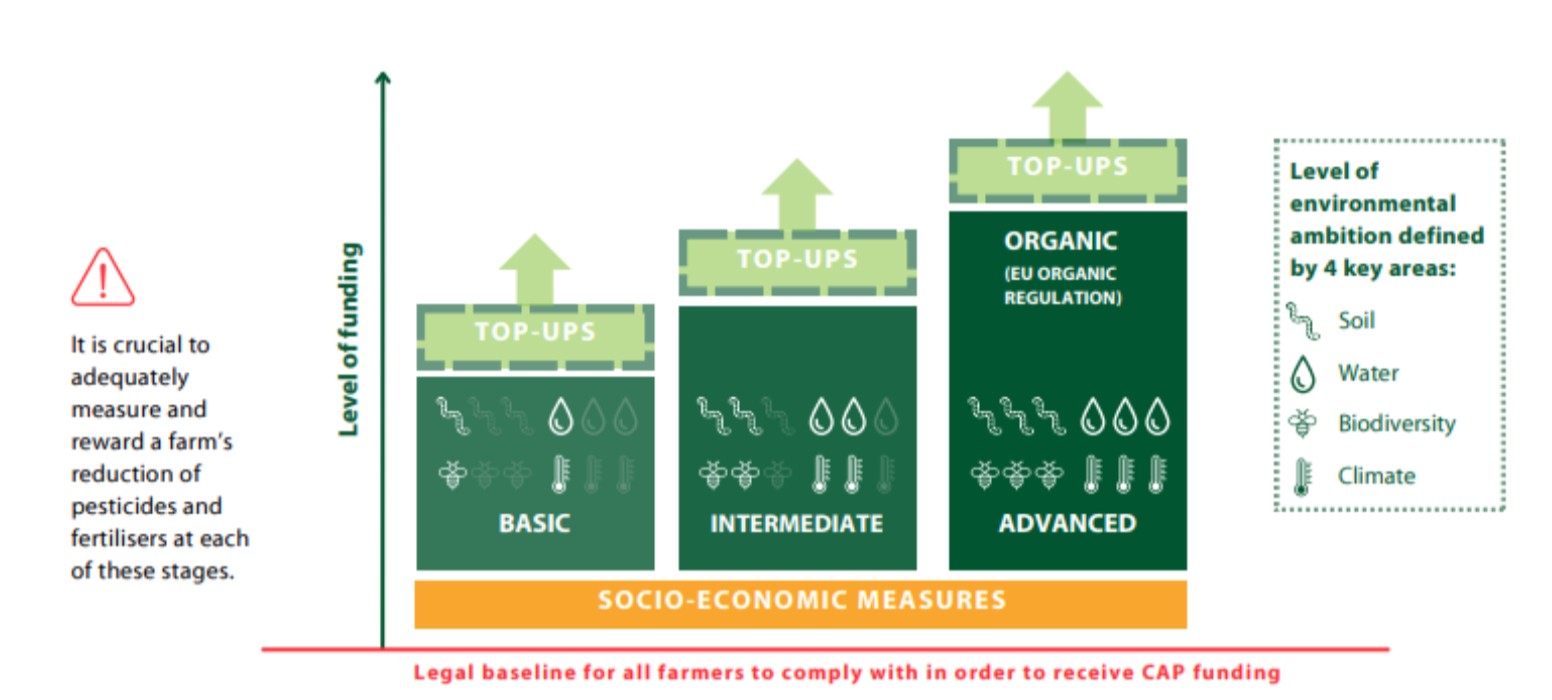
This vision developed by the EU organic movement, and primarily by the farmers’ group, allows for high environmental ambitions, a coherent approach at farm level, while easing administration for farmers and national authorities. This vision makes two objectives meet: rewarding farmers who are already engaged in sustainable production methods and supporting other farmers in a gradual transition to agroecology.
With this new CAP, the European Union could have seized the opportunity to engage the agricultural sector in an ambitious agroecological transition, by supporting farmers to transition and reward those already engaged in sustainable methods of production. Instead, the Commission’s proposal maintains a dangerous status quo with the prominence of area-based payments, risking leading to a race to the bottom among Member States. The budget and the CAP proposal will now be discussed in the European Parliament and the Council: like every CAP reform, many more changes and developments are to be expected. The organic movement will be mobilized to improve this future CAP and ensure that organic farmers are adequately rewarded for the public goods they deliver.
Author: Laura Sauques, Policy Officer on Sustainable Food Systems and the CAP at IFOAM Organics Europe
Subscribe to Bio Eco Actual Newsletter and be up to date with the latest news from the Organic Sector
Bio Eco Actual, International Organic Newspaper
Read Bio Eco Actual