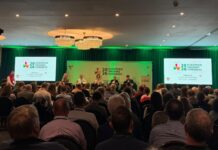


Combining the robustness of certification with the measurability of ESG performance. This is the challenge of #openSIroad, the new standard for integrated sustainability promoted by ICEA – Institute for Ethical and Environmental Certification, recently presented at Ecomondo during the conference “OpenSIroad – The New Path to Integrated Sustainability.
The project was born from the meeting of #OpenSustainability, ICEA’s systemic vision that bridges food and non-food sectors, and SI Rating®, the scientific ESG evaluation methodology developed by ARB SB in collaboration with the Sustainability Accounting Standards Board (SASB), the global reference for financial materiality.
An open, scientific, and circular approach
The proceedings were opened by Giuliano D’Antonio, a member of ICEA’s Board of Directors, who defined sustainability as “a synergy of development” and emphasized that the organization’s mission has always been based on alignment between values and practices—today more than ever essential for guiding the transition.
Mariano Serratore, ICEA’s Technical Director, then illustrated the genesis of the Open Sustainability project and the philosophy behind it: “ICEA acts as a facilitator of dialogue between different sectors,” he explained, “because sustainability cannot be compartmentalized. Food and non-food are interconnected worlds: consider biodiversity, the bioeconomy, and the circularity of production processes and certifications.”
From this integrated approach emerged the concept of OpenSIroad, a platform that combines the principles of circularity, measurability, and social responsibility with a methodology that integrates ESG evaluations, biodiversity indicators, carbon footprint, and water footprint.
Measure to improve
In her speech, Ada Rosa Balzan, founder and president of ARB SB, highlighted the strategic importance of the new standard, noting that sustainability remains a central topic in European debates despite attempts to slow its implementation. “The recent European Parliament halt of the Omnibus package,” she stated, “shows that the discussion is still ongoing and that sustainability remains an integral part of European policies.”
Balzan emphasized that OpenSIroad provides a scientific method for impact assessment and allows tackling crucial issues such as emission offsets with verifiable criteria, rather than relying on statements of principle. “Only what is measured can be improved,” she stressed, “which is why it is essential to have tools that provide transparency and credibility to companies’ sustainability actions.”
Another key strength of the new standard is its alignment with the European Central Bank guidelines for ESG creditworthiness assessment (effective from 2026) and the new ISO 9001, which from 2026 will integrate sustainability among the fundamental requirements of business context analysis.
From theory to practice: the three case studies
The second part of the meeting gave a voice to the companies that participated in the pilot phase of the project, testing the new standard in their own contexts.
For GS Sistemi, a Tuscan company specialized in IT solutions, Clarissa Marchetti highlighted the reputational benefits gained: “The journey with OpenSIroad allowed us to communicate our commitment to social and environmental responsibility to clients more effectively. The scientific and independent assessment of ESG performance now represents a real competitive advantage.”
Valeria Ghezzi, from Hotel Raffaello in Milan, emphasized that “sustainability is first and foremost a culture,” a process that starts with people and is built day by day. “The most difficult change,” she explained, “is internal: helping all staff understand that sustainability is not an obligation, but an opportunity. Technology plays a fundamental role, as it helps us reduce time and waste while optimizing energy use.”
Closing the panel was Rossano Razzoli from the Consorzio Stazione Invernale del Cimone, who focused on collective responsibility toward the territory. “Our consortium generates economic impact and employment,” he said, “which entails responsibility toward present and future generations. The OpenSIroad journey helped us recognize and enhance sustainability actions we were already implementing but had not fully appreciated. It also reminded us that sustainability and safety must carry equal weight.”
At the end of the presentations, Paolo Lumaca, President of ICEA, awarded the #openSIroad certifications to the three pilot organizations, in recognition of their concrete commitment to a model of integrated and measurable sustainability.
An open model for a measurable future
The day demonstrated that #openSIroad represents much more than a new certification: it is an open, modular standard, adaptable to any sector, capable of enhancing existing certifications and transforming them into quantifiable and demonstrable strategies.
Among the key concepts highlighted during the discussions were biodiversity, culture, responsibility, measurability, synergy, and circularity. Ideas that capture the essence of the project and its potential to combine technical rigor with ethical vision.
“With #openSIroad,” Serratore concluded, “ICEA aims to make sustainability not only declared, but verifiable, competitive, and value-generating.”
The article ICEA presenta #openSIroad a Ecomondo: il nuovo standard per la sostenibilità integrata, was originally published in GreenPlanet.

Subscribe to Bio Eco Actual Newsletter and be up to date with the latest news from the Organic Sector
Bio Eco Actual, International Organic Newspaper
Read Bio Eco Actual