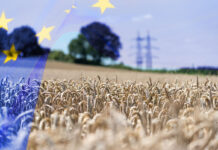


Imagine being told you are no longer allowed to grow potatoes, lentils, beans, or even wheat in your backyard. It sounds absurd — yet this is precisely the kind of restriction that could become European law if ongoing negotiations on seed regulation go the wrong way.
Indeed, new rules are currently being defined at European level to update and harmonise legislation on the production and marketing of seeds and other plant reproductive material (PRM) such as seedlings or cuttings. The existing framework is a patchwork of over ten pieces of legislations, some dating back to the 1960s, applied inconsistently across Member States. An overhaul of the system has therefore gradually become necessary, and the stakes are high: the new regulation could either help reverse the dramatic loss of agricultural biodiversity or accelerate it.
The final negotiations – known as “Trilogues”, where the European Commission, Parliament and Council forge compromises between their respective positions – are currently raising serious alarm among farmers, organic breeders, seed companies, and seed conservation networks.
Three provisions that would undermine farmers’ and gardeners’ choice while jeopardising agrobiodiversity
The restriction of conservation varieties
Conservation varieties are genetically diverse cultivars adapted to specific local conditions — either traditionally grown in a region or newly bred. Member States want to confine their production strictly to their region of origin, and to limit newly bred varieties to fruits and vegetables only.
This would have critical consequences on the many organic farmers, breeders and seed companies that use, develop, and market them. That would be the case for Landsorten, a Danish organization that distributes landrace varieties of arable crops, which offer significant benefits for organic farmers. For instance, the PopKorn winter wheat has strong smut resistance, while the Mariagertoba is a robust spring wheat with good weed competition and resistance to common bunt. Restricting the registration of conservation varieties to fruits and vegetables would have a significant impact on the work of organizations like this one.
The geographical restrictions are equally counterproductive. The value of conservation varieties lies precisely in their ability to adapt to specific local and climatic conditions — a variety developed in Greece may be exactly what a Spanish farmer needs. For certain crops, propagation outside their region of origin is simply a necessity: apple, pear, plum, and cherry trees, for instance, are often propagated in organic nurseries in other countries when local nursery capacity falls short.
In addition, as Edwin Nuitjen, Chair of the European Consortium for Organic Plant Breeding (Eco-PB), puts it: ” Such varieties are often developed by small-scale breeders, networks and breeding companies. Protecting this category is not only an agronomic question — it is also a matter of supporting a diverse and resilient seed market, necessary to maintain diversity, which is not dominated solely by large commercial operators.”
The undermining of farmers’ right to save and exchange seeds
The right of farmers to save, reuse, and exchange their own seeds is recognised under international law — including the UN Declaration on the Rights of Peasants (UNDROP) and the International Treaty on Plant Genetic Resources for Food and Agriculture. These practices have sustained agrobiodiversity for centuries and helped farming communities support one another through crises.
Yet Member States and the European Commission are pushing to restrict them in ways that would make these rights unworkable in practice — for example through limiting exchanges to small quantities, confining them to local areas, and imposing strict phytosanitary compliance requirements, the same ones that companies must meet for the commercial marketing of such seeds, which would place an overwhelming administrative and financial burden on individual farmers.
For organic farming, the stakes are especially high. Organic seed production remains very low in several Member States, complicating the achievement of the target of 100% organic seed use by 2037. Farm-saved and farmer-exchanged seeds will be essential to reaching that goal and to giving farmers access to varieties suited to their systems.
The limitation to what gardeners can grow
Under current proposals, seeds sold to amateur gardeners could be restricted to fruits and vegetables only. This would be a significant departure from the current reality, with serious consequences for the many organic seed companies that sell cereals, legumes, and cover crops to non-professional users. From the Basque Country to the Netherlands to Germany, small seed businesses serve a public that simply wants to grow a wide variety of plants — including, yes, potatoes, lentils, and wheat.
Beyond the economic damage to these businesses, the principle at stake is straightforward: people should be free to grow whatever they choose in their own gardens.
What needs to happen
The window to get this right is narrow. Trilogue negotiations are moving fast as the Cyprus Presidency aims to find a compromised text by the end of June. Negotiators must listen to the farmers, organic seed producers, and civil society organisations who have raised these concerns — and back the European Parliament’s more progressive position. The PRM Regulation has the potential to respond to the many challenges faced by the agri-food sector. But many corrections are needed to achieve this goal.
Author: Caroline Formont, IFOAM Organics Europe Policy Officer.
Subscribe to Bio Eco Actual Newsletter and be up to date with the latest news from the Organic Sector
Bio Eco Actual, International Organic Newspaper
Read the Bio Eco Actual International Yearbok 2025 – Trends 2026