


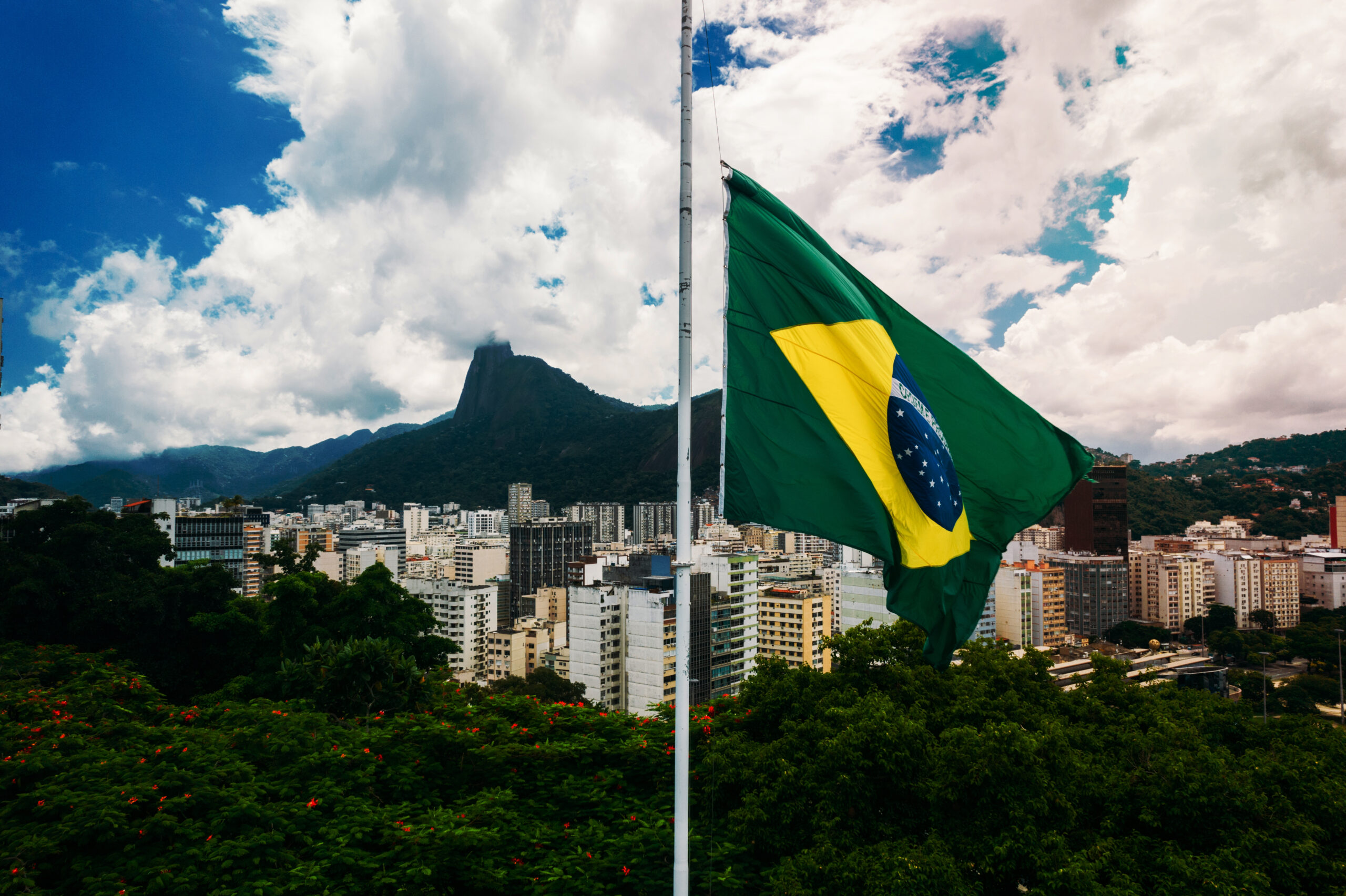
The Brazilian Amazon has been chosen as the venue for COP30, which will take place from November 10 to 21, with the aim of putting the global climate agenda back on the table.
The annual meeting brings together major international actors. From state representatives to large corporations and social movements, participants will gather to jointly discuss how to address the challenges posed by—and intensified by—the climate crisis. However, the diversity of actors involved, each with multiple sensitivities and perspectives on climate change, its causes, and how to combat it, makes the meeting a large conference but limits its capacity to establish a unified climate agenda.
After COP29 in Azerbaijan, marked by significant controversy over the host country’s oil industry interests, which highlighted the inability to make collective progress toward phasing out fossil fuels, COP30 will focus on the energy transition.
Below, we outline a general framework of the major topics and challenges to be debated at the global meeting, including climate finance, carbon emission commitments, deforestation and intensive resource exploitation, and the socio-ecological energy transition.
COP30 in Brazil represents an opportunity for the international community to advance the complex dialogue on climate change prevention and mitigation
First, one of the major topics on the climate agenda is financing the mitigation and resilience-building efforts themselves. The 2015 Paris Agreement established that Global North countries should contribute a higher percentage of resources than those of the Global South as a mechanism to compensate for unequal international relations. However, no specific quota or mechanism was set. Currently, the debate remains open, and Global South countries emphasize the importance of the North fulfilling and expanding its financial obligations according to the principle of common but differentiated responsibilities. They advocate understanding the climate crisis as a historical process in which the Global North has played a greater role within internationally unequal socioeconomic relationships.
Another key point on the climate agenda is the reduction of carbon emissions, one of the main greenhouse gases. The commitment was established in the 1997 Kyoto Protocol and reaffirmed in the 2015 Paris Agreement, with all states agreeing to reduce emissions and develop national reduction agendas, with the ambitious goal of achieving climate neutrality by 2050.
Currently, not only is the agreed reduction path not being followed, but emissions are slightly increasing. Beyond just the data, it is crucial to understand which actors are making the greatest efforts and what real capacities exist behind reduction demands. Once again, Global South countries emphasize shared but differentiated responsibility, highlighting the crucial need for technology transfer and a detailed plan for achieving emissions reduction, given that they provide the raw materials needed for international trade. They also point to the counterproductive dynamics created by carbon credit markets. In this context, Brazil proposes an Open Coalition for the Integration of Carbon Markets to harmonize rules and transparency among existing carbon trading systems.
Furthermore, closely linked to decarbonization processes, moving away from fossil fuels (coal, oil, and gas) and replacing them with clean sources and sustainable processes to drastically reduce carbon emissions, is the debate on how the transition to renewable energy should occur. Establishing a roadmap to phase out fossil fuels is crucial, but so is setting clear regulations for the energy transition, which again is marked by deep inequalities among actors. Global South countries are major suppliers of raw materials for components like batteries, which require large amounts of minerals such as lithium and cobalt—resources that have perpetuated socioeconomic inequalities for decades and generated significant violence against populations in the Global South.
Creating a framework for a just and socio-ecological energy transition with structural considerations is essential for achieving environmental and social justice, which currently seems almost impossible. One example of social tensions surrounding energy transitions occurs in Brazil, where local communities highlight the contradictions of holding COP in the Amazon—a major deforestation hotspot—while pointing out Brazil’s extractivist economic model (exploitation and export of raw materials). They argue that a global energy transition, as proposed in practice, may reproduce existing socioeconomic and environmental inequalities.
Technology transfer is crucial and a detailed plan for achieving emissions reduction
Once again, agroecology does not appear to play a prominent role in the meeting beyond being mentioned as a mechanism for food sovereignty, preferably local or fair-trade, and as a tool to contribute to mitigation and resilience-building in the face of the climate crisis.
In short, COP30 in Brazil represents an opportunity for the international community to advance the complex dialogue on climate change prevention and mitigation, integrating crucial issues. However, the multitude of perspectives and interests among actors, combined with the depth of climate dynamics encompassing socioeconomic inequalities and international relations, is likely to remain at the center of discussions.
Author: Gemma Isern Castells, Political Scientist, Master in International Relations, Security and Development
Subscribe to Bio Eco Actual Newsletter and be up to date with the latest news from the Organic Sector
Bio Eco Actual, International Organic Newspaper
Read Bio Eco Actual