

As Europe searches for resilient agricultural solutions in the face of climate pressure and declining soil fertility, the InBestSoil project offers grounded perspectives from three very different Spanish landscapes. The experimental sites in Extremadura, Cartagena, and Touro reveal how soil regeneration unfolds when scientific expertise, local knowledge, and long-term commitment work together.
Project coordinator & researcher Dr. Andrés Rodríguez Seijo, Postdoctoral Researcher at the University of Vigo (Ourense, Spain), emphasises why soil health has become a defining priority for Europe’s agricultural future. “Soil health is becoming the cornerstone of Europe’s agricultural future. It underpins crop productivity, water efficiency, biodiversity, and resilience to global change,” he explains. Rebuilding organic matter, restoring biological activity, and improving soil structure, he adds, represent both environmental and economic necessities. “Investing in soil is not just an environmental ambition, it’s an economic necessity and the most reliable way to protect the long-term viability of European farming.” Across all experimental sites, early results indicate that regenerative practices are scalable and economically grounded. “We’re observing better ground cover, improved water infiltration and greater biological activity,” Andrés notes. “Yields can remain stable or even begin to recover as soils become more functional. In some cases, although yields can be a bit lower, this reduction is compensated for by lower labor costs.
In Extremadura, the El Baldío dehesa shows how quickly soil recovery can begin when grazing systems are redesigned. Elena de Julián, Project Technician at Fundación Global Nature and Coordinator of the El Baldío Experimental Site, describes the 230-hectare estate as a traditional Mediterranean oak woodland shaped by livestock for centuries. “Our goal is to develop a profitable grazing model that restores soil health and biodiversity,” she says. After seven years of regenerative management, the results are visible. “Rotational grazing is helping us increase pasture quality and diversity, reduce bare soil, and decrease degraded scrubland. We’re improving the soil’s moisture retention capacity and the amount of stored carbon,” she explains. Elena notes that grazing animals play an essential ecological role. “The controlled impact of livestock activates microorganisms and invertebrates like dung beetles, which improve soil fertility and ecosystem quality”.
Investing in soil is both an ecological commitment and a strategic economic opportunity for Europe’s farming systems
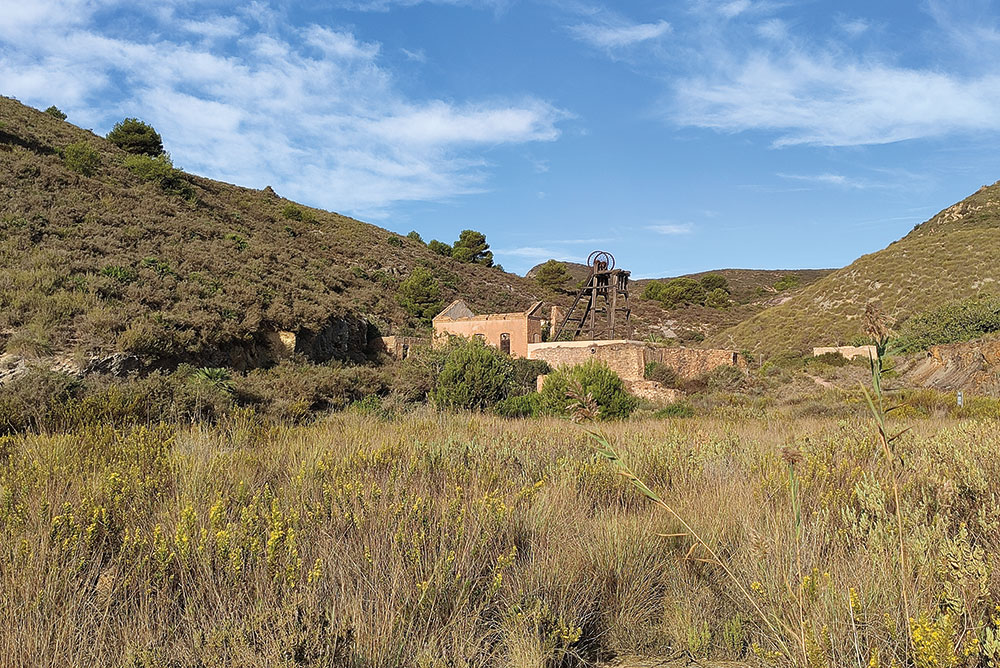
In the Cartagena-La Unión mining district, the task is far more complex. Dr. Virginia Sánchez Navarro, Researcher in the Department of Agricultural Engineering at the Technical University of Cartagena, describes the starting point starkly: “These soils face contamination, hyperacidification, extremely low organic matter, and a lack of vegetation cover.” Working alongside Dr. Jorge Luis Sánchez Navarro, Researcher in the Department of Business Economics at the Technical University of Cartagena, she applies a strategy combining industrial and livestock-derived amendments with native, metal-tolerant vegetation. “We see early improvements in soil structure, a marked reduction in erosion, and the emergence of vegetation in previously bare areas,” Virginia says. Jorge Luis adds a financial perspective: “The objective is not only to rehabilitate soil but to assess and value its ecosystem services so that restoration becomes viable for landowners.”
In Galicia, the Touro site offers yet another layer of complexity. Javier de Rivera Outomuro, Project Manager and Coordinator of the Touro Experimental Site, explains that the former copper mine operated between 1973 and 1988, leaving behind soils deeply impacted by acidic drainage and heavy metals. “The soils formed on the settling pond and mine spoils have serious problems due to acidic drainage and extremely high concentrations of heavy metals,” he says. The sulphide-rich geological substrate, containing pyrite, pyrrhotite, and chalcopyrite, created a harsh environment for both soil life and vegetation.
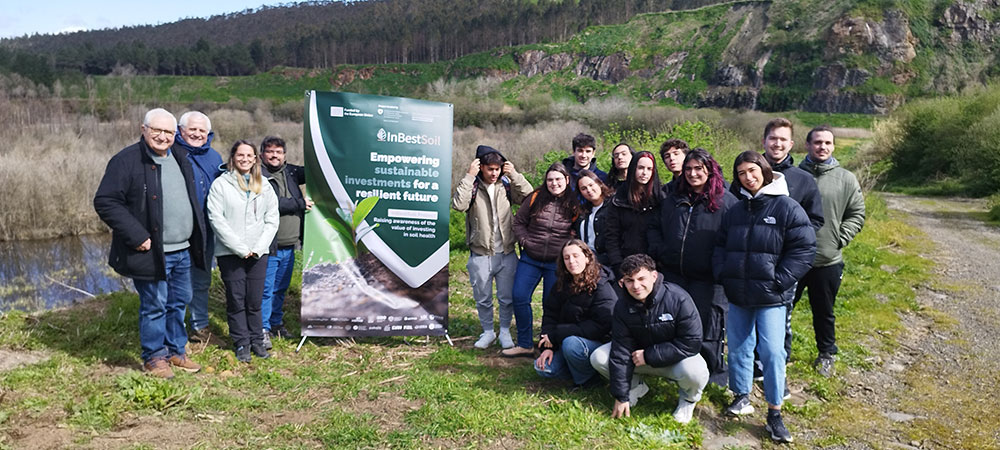
Remediation began in the late 1990s, when the team realised that local materials alone could not restore the soil. “The proposed and approved plan was based on the use of external materials, given the impossibility of recovering exclusively with the mine’s own materials,” Javier explains. Over time, non-toxic organic and industrial by-products with high acid-neutralisation capacity, such as mussel shells and biomass ashes, were applied to rebuild soil structure and reduce contamination. “After several years of testing and application, the area was highly improved in terms of soil structure, pollution reduction, and increase of biodiversity,” he notes. A reactive wetland was also established to treat acidic drainage and raise water pH, accelerating the return of ecological functions. Beyond Touro, Javier highlights the site’s broader impact. “The lessons learned here have been used to develop a technology that has been successfully applied in other mining and industrial areas with similar problems, with a focus on the reuse of waste from a circular economy perspective.”
Local engagement differs across the regions. In Extremadura, growing interest in regenerative grazing is supported by Fundación Global Nature’s outreach efforts. “We know our responsibility as a lighthouse in implementing these techniques,” Elena de Julián says. “Many people are still reluctant because change requires knowledge, effort, and an initial investment. But we are confident that more will join, and that institutions will truly support this transition.” In Cartagena and Touro, support tends to be more cautious, shaped by the technical complexity and the long timelines typical of mining restoration.
Looking ahead, Andrés Rodríguez Seijo envisions a future in which soil improvements are recognised and rewarded. “We are moving toward a future where soil health will be something farmers can measure clearly, compare fairly, and be rewarded for improving,” he says. Standardised indicators and verification methods, combining laboratory analysis, field assessments, and remote sensing, could embed soil health into both public policy and emerging market mechanisms. Across Spain’s three experimental sites, one lesson stands out: even severely degraded soils can recover when ecological science, adaptive management, and long-term collaboration align.
InBestSoil is a European research and innovation project dedicated to developing practical and economically viable pathways for soil regeneration. Bringing together universities, research centres, NGOs, farmers, land The experimental sites in Extremadura, Cartagena, and Touro managers, and industry partners across Europe, the project explores how soil health can be measured, restored, and integrated into future policy and market frameworks. Through experimental sites in Spain, the Netherlands, and other European regions, InBestSoil tests field-based solutions that rebuild soil structure, enhance biodiversity, improve carbon storage, and strengthen the long-term resilience of agricultural landscapes.
- Further information at www.inbestsoil.eu
Article Originally Published in Bio Eco Actual International Yearbok 2025 – Trends 2026.
Subscribe to Bio Eco Actual Newsletter and be up to date with the latest news from the Organic Sector
Bio Eco Actual, International Organic Newspaper
Read the Bio Eco Actual International Yearbok 2025 – Trends 2026