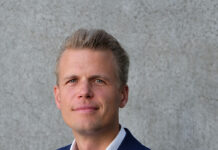

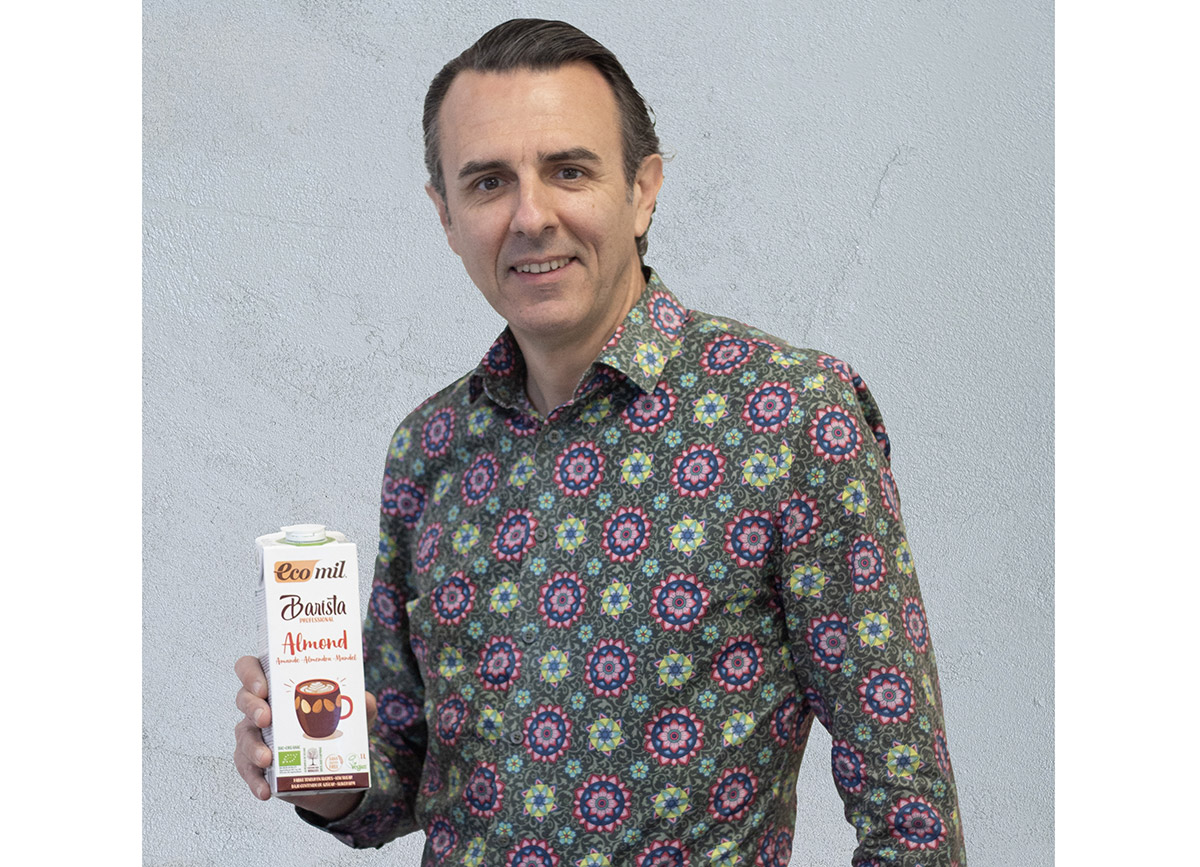
Franck Debaere is the International Brand Builder at Laboratorios Almond, a leading company in the manufacturing and commercialization of organic products, mainly under its brands NaturGreen and Ecomil. Passionate about the food sector, Debaare’s more than 20 years of experience in the export business have given him an excellent knowledge of the international distribution of organic and healthy foods.
How did you start in the industry, and what motivates you about being in the organic sector?
My beginnings in the organic food industry date back to 2001, when I joined Laboratorios Almond to create and structure the Export Department, which at the time did not exist. Everything I have known and learned about the organic food sector and international organic distribution, I have learned thanks to this job, which has allowed me to travel to all continents and see how distributors and retailers in the organic sector operate worldwide.
What motivates me is that it is a sector that has personally given me a lot of knowledge about human nutrition because it is also important to understand food and its nutritional properties. That is also in the DNA of our brands. We have many nutritional claims in Ecomil and NaturGreen. It is a field of knowledge that interests me greatly.
Food is in my DNA. I come from a family of food retailers, bakers, pastry chefs, restaurateurs, butchers, fishmongers, and fruit and vegetable wholesalers. Working in the organic food sector, which respects health and the environment, is like a battery inside me that never runs out.
«Exporting rhymes with adaptation and segmentation. One must be capable of adapting to the target market and ensuring that the text complies with its regulations to provide good service to the distributor»
You have been in the industry for 24 years. Have you seen the creation of many international organic markets?
I have witnessed the beginnings of several markets, both European and non-European. One must realize that organic food distribution is a global phenomenon. It is curious that whether we are in China, Japan, the United States, or Argentina, we will always find a typical organic food store with a founder who has more or less the same story: expressing their passion for organic and natural food, which led them to create a business project. This is the core of organic food distribution.
Then we have the highly modern sector, such as European distribution, which I consider the most advanced globally. We have the German and French markets, which are very well-established with major chains like Biocoop (which has 750 stores) or La Vie Claire (with 320 stores). There are also many smaller chains, but with very modern, highly consolidated, and highly professional distribution.
When I started, organic chains barely existed, and those that did were poorly organized or highly artisanal. This professionalization of distribution has driven supply and accessibility, reducing barriers for the average consumer to enter an organic store. It is no longer like in the past when one had to go to a herbalist shop to buy a food product for a special diet or specific need.
What challenges does selling outside the EU entail?
It involves market access challenges: whether there are more barriers or hurdles at the documentation, importation, or tariff level, and also in terms of packaging—that is, adapting packaging to the language of the destination country. Exporting rhymes with adaptation and segmentation. One must be capable of adapting to the target market and ensuring that the text complies with its regulations to provide good service to the distributor and avoid making them go through the hassle of opening boxes and placing labels, which is not very professional.
«A shift is needed among consumers towards more regular organic consumption, not just as an occasional indulgence»
In Europe, we still have a very strong specialized sector that has gone through a double crisis, especially in France and Germany, due to the COVID rebound effect and an excessive number of points of sale. There has been a widespread correction with the closure of many stores, which has brought things into balance. Just because 100 or 200 organic stores open in a country each year does not mean enough consumers will suddenly emerge to sustain them. The same happened with the organic offerings in traditional supermarkets—there was a moment of oversupply. This has now adjusted, leaving only products with nutritional and environmental value. It made no sense to find organic Heinz ketchup or organic Lay’s chips.
In my opinion, organic food must be healthy. If it is just to reproduce junk food in an organic version, it does not create a good image. The future of the sector lies within the healthy eating movement, linked to well-being.
What elements do you think will shape the market in 2025?
In the major European markets, this correction has ended. By 2024, recoveries had already begun, and I believe they will continue. However, we will not see the double-digit growth rates that we witnessed before COVID.
The foundation is healthier, and a shift is needed among consumers towards more regular organic consumption, not just as an occasional indulgence. Very few consumers (less than 5%) consume 100% organic. Most consumers alternate between organic and conventional products, preferring certain foods in their organic version because they perceive them as safer.
Is this a general trend, or are there markets where organic products make up a larger share of the shopping basket?
In Europe, the leading countries in per capita organic consumption are France, Germany, and the Nordic countries. Other countries are evolving positively. Spain is also showing a positive trend in organic consumption. I also perceive that consumers are considering not only the benefits for their health but also for the environment. There were several attempts in France and other countries to discredit organic products with certifications like Haute Valeur Environnementale (HVE), but they collapsed under their own weight. People truly trust organic food regulated by the European Union with the official label and have realized that these “intermediary certifiers” are useless.
In the medium to long term, organic consumption will continue growing in Europe among consumers aged 50-65 and those approaching retirement. They gain more purchasing power for food as they have fewer expenses than during their working life, and they prioritize well-being to live longer and healthier. This represents a significant number of potential consumers who could adopt organic consumption.
«People truly trust organic food regulated by the European Union with the official label and have realized that these ‘intermediary certifiers’ are useless»
In how many countries is Laboratorios Almond present?
We are now in 50 countries. At one point, we were in nearly 70, but we have slightly changed our strategy. Now, we are more selective and focus on markets where we already have a strong position to reinforce it with our brands Ecomil and NaturGreen, which hold significant value. We are also present in developing markets with potential.
There are markets that, for us, are unattainable, despite multiple attempts, such as the United States. There, we cannot compete with the major American players. Our focus is on Europe and Southern European countries.
What advice would you give to other companies in the sector looking to export?
There is no magic formula in prospecting or client acquisition that solves everything. It is a combination of many elements: trade fairs, commercial missions, or even getting on a plane and making a personal visit when there are strong signs of genuine interest.
Although video conferencing has become widespread, when establishing a commercial relationship with a distributor who will sell and represent your brand in a country, it is not a mere buy-sell operation. You need to build a relationship of trust with the people in that distribution company and ensure they fully understand your brand’s positioning and product philosophy. They need training, and you need to understand how the market works on-site—who the players are, the competition, and the opportunities. This only works when you meet your clients in person. For me, the key is face-to-face meetings with distributors and being present in the markets.
Part of our success in both customer acquisition and maintaining customer relationships lies in our availability and ability to travel, to move around, and to stay close to our clients. In January, we made three international trips, followed by the BIOFACH trade fair in February and then the Gulfood fair in Dubai.
«One of the most important functions of marketing in international trade is understanding the need to adapt the product and communication strategies»
Exporting means traveling and meeting the client. Anyone who wants to export but relies solely on a database of contacts or a method like LinkedIn, without adding the crucial element of building a relationship with physical presence among their clients and distributors, will never achieve success in exporting.
The human aspect is often lost…
There may be business models where customer relationships can be fully digitalized. However, in food distribution, you need to work side by side with the distributor and their sales team; you need direct feedback. There are two approaches: Desk to Street and Street to Desk. They are both highly effective, but only if you combine them. If you don’t, you will never find balance. It’s a somewhat unconventional way of defining how to approach trade and customers, but for me, it is key.
What should a good marketing and promotion strategy include?
One of the most important roles of marketing in international trade is understanding the need to adapt both the product and the communication that the international sales team will carry out. Often, the international sales team is seen as the odd one out within the company. But just as the sales team incorporates different national channels in their campaigns (specialty stores, retail, HORECA, etc.), they must also integrate the export team as another channel rather than treating it as something separate that doesn’t concern them.
This requires interdepartmental collaboration. If the international sales department sets out on its own, like Don Quixote, without the support of a department, intelligence, or internal transmission to assist with research, trade fair organization, or product documentation in foreign languages, the challenge becomes much greater.
Author: Oriol Urrutia, Bio Eco Actual Co-Editor
Subscribe to Bio Eco Actual Newsletter and be up to date with the latest news from the Organic Sector
Bio Eco Actual, International Organic Newspaper
Read Bio Eco Actual