

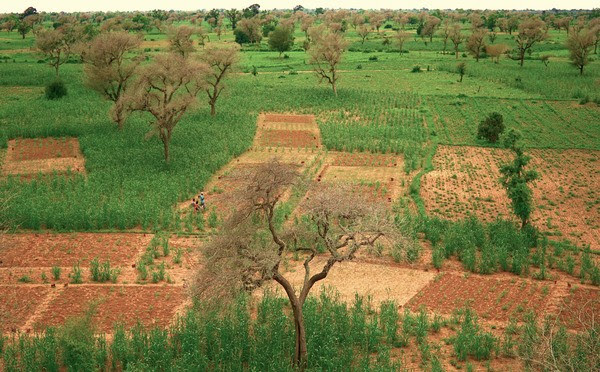
From 2020 to 2025, the EU-funded SustainSahel project supported smallholder farmers in the Sahel region, tackling land degradation and climate stress. Led by FiBL, the project demonstrated that agroecological practices are both effective and economically feasible. At seven pilot sites researchers and farmers worked hand in hand with institutions from Mali, Senegal, Burkina Faso, France, Germany, and Switzerland. More than 5000 farmers were involved representing thousands of hectares across different rainfall zones in the Sahel zone.
Farming practices with impact
Harun Cicek, project leader from the FiBL Department of International Cooperation, states: “We found that simple practices like mulching, composting, and integrating local trees and shrubs can boost yields by up to 40 percent. Furthermore, these measures improve soil and water management and provide fodder and medicinal resources.”
Lead farmers are crucial for yield improvement
A highlight was the “lead farmer” model: Farmers trained in field schools passed their knowledge to 20 to 40 peers, creating a strong multiplier effect. Adoption of these practices led to yield increases of 150 to over 300 kilograms per hectare, translating to gains of up to 40 percent, and improved production stability even under climate stress.
Key recommendations for the future
At the closing workshop in May in Dakar, Senegal, concrete recommendations for stakeholders were compiled:
- For farmers: Adopt agroecological and organic farming. Necessary information and know-how can be found in the manuals and educational materials on the project website.
- For policymakers: Integrate agroecology into agricultural and environmental strategies; revise land codes to secure tree rights for farmers; invest in extension and supply chains; fund participatory research and transition support.
- For researchers: Deepen knowledge of tree-crop interactions, soil-water dynamics, and carbon storage; strengthen monitoring by using drones and satellite data; study adoption barriers and socio-economic impacts.
Agroecology is the future for Africa
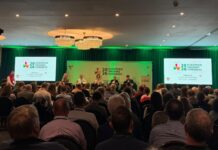
In May 2025, SustainSahel led the organization for a large-scale collaborative conference titled “Agroecological transition of food systems in Africa.” Together with eight other EU-Africa projects they provided compelling evidence: organic and agroecological farming are proven, scalable solutions for a sustainable African future.
- Further information available at www.fibl.org/en
Subscribe to Bio Eco Actual Newsletter and be up to date with the latest news from the Organic Sector
Bio Eco Actual, International Organic Newspaper
Read Bio Eco Actual