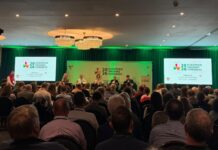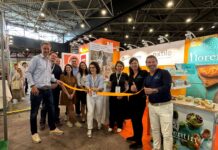

The new TP Organics Strategic Research and Innovation Agenda (SRIA), titled “Vision for Future Organic and Agroecological Research: Triple Lead for Sustainable Food Systems”, has been launched at the Organic Innovation Days in Brussels.

The mission of TP Organics, the European Technology Platform (ETP) for Research & Innovation into Organics and Agroecology, is to shape research & innovation for organic and other agroecological approaches that contribute to sustainable and resilient food and farming systems. This is why TP Organics develops research & innovation agendas and roadmaps for research action at EU and national level.
The new Strategic Research and Innovation Agenda is was launched on 4 November 2025 at the Organic Innovation Days in Brussels. Developed with the contribution of the OrganicTargets4EU project, in preparation of the upcoming European Competitiveness Fund and the next Horizon Europe programme (2028 -2034). The final project conference of the OrganicTargets4EU project is taking on 5 November, back-to-back with the Organic Innovation Days.
The SRIA development process was highly participatory and built on contributions from OrganicTargets4EU practice partners and their national networks. FiBL Europe, as scientific coordinator, consolidated inputs from practice partners and stakeholder events such as BIOFACH Science Day and the Organic Innovation Days, identifying three main research themes and 35 research questions in collaboration with IFOAM Organics Europe and TP Organics.
Thünen Institute, ICROFS, and COISPA contributed expertise respectively on research priorities, policy and funding perspectives, and organic aquaculture. Practice partners from eight focus countries – Austria, Denmark, France, Germany, Greece, Italy, Hungary, and Romania – organised national workshops to identify and validate research needs. These national inputs, reviewed collectively during the Organic Innovation Days 2024, ensured that the SRIA reflects Europe’s diverse organic and agroecological contexts.
Triple wins for sustainability
Today’s research and innovation influence tomorrow’s food and farming systems. This is why the new SRIA identifies key research needs for the organic sector, while also addressing broader priorities for the transition towards agroecology. The main part “Research & Innovation Priorities” is divided into three lead areas, or “triple wins for sustainability” that make up TP Organicsʹ vision:
- Leading for the environment, biodiversity and the climate Leading for people, communities and sustainable livelihoods Leading for responsible innovation.
The SRIA reflects two years of extensive consultation with farmers, researchers, and other stakeholders in the organic sector and the agroecology movement. “The new Strategic Research and Innovation Agenda shows that research in organic and agroecology is strategic for Europe’s competitiveness and resilience. It calls for bold investment in innovation that benefits the environment, people, and responsible progress”, says Bram Moeskops, Managing Director at FiBL Europe and Scientific Coordinator of the new SRIA.
Policy recommendations
The final section in the SRIA provides key recommendations for policymakers working on Horizon Europe, including the European Partnerships, to boost the impact of R&I through inclusive governance:
- Treat organic and agroecological R&I as priorities in the European Competitiveness Fund (ECF) and Horizon Europe: 30% of the budget dedicated to agri-food under Policy Window “Health, bioeconomy, agriculture and biotechnology” in the ECF and Horizon Europe should be ring-fenced to organic R&I needs.
- Reinforce the multi-actor approach in R&I calls to ensure public funding delivers actionable outcomes for end-users and to bridge the gap between conception and market deployment.
- Mainstream Financial Support to Third Parties in relevant topics to widen participation, reduce administrative friction for newcomers, and accelerate context-specific experimentation.
- Make two-stage procedures the default, especially when targeting newcomers and practice-oriented innovation, and use lump-sum funding as a powerful simplification tool.
- Move towards smaller, modular consortia that operate faster and integrate existing living labs and lighthouse farms as real-world testbeds.
- Promote open science, while protecting data rights, and integrity and ensure meaningful participation of civil society and practitioners in project governance
Further information available at www.tporganics.eu
Contact details:
- Maria Gernert, TP Organics Coordinator, maria.gernert@tporganics.eu
- Ambra De Simone, R&I Associate Manager, IFOAM Organics Europe and Project Coordinator, OrganicTargets4EU, ambra.desimone@organicseurope.bio
Subscribe to Bio Eco Actual Newsletter and be up to date with the latest news from the Organic Sector
Bio Eco Actual, International Organic Newspaper
Read Bio Eco Actual