
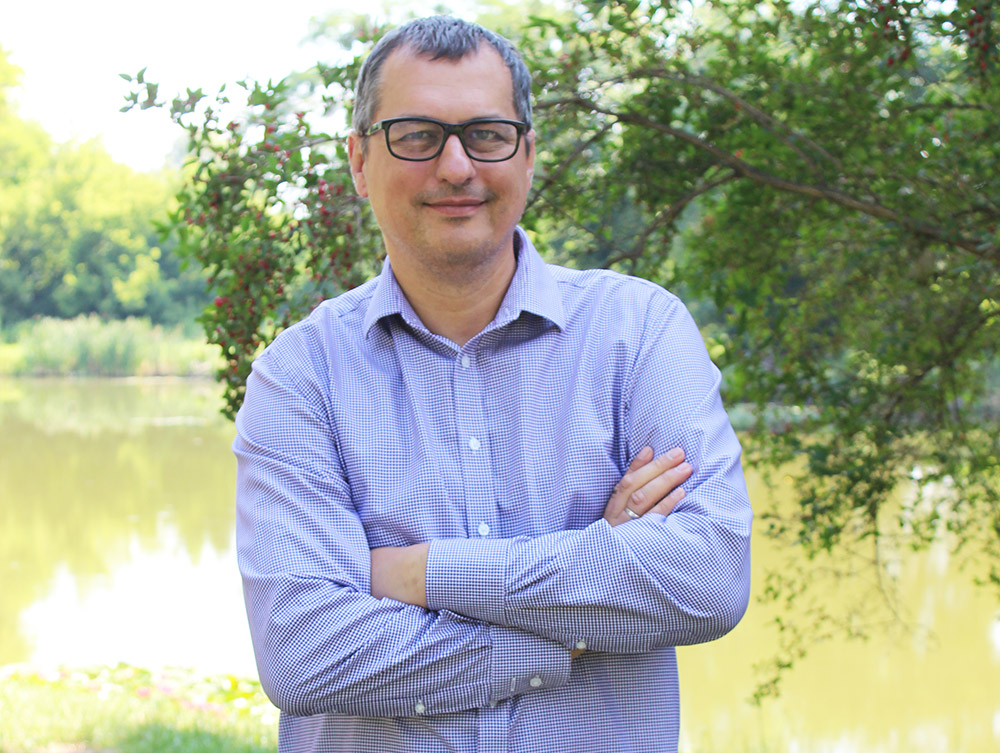
Sylwester Strużyna is a graduate of the Faculty of Economics at the University of Szczecin and completed postgraduate studies at the Warsaw School of Economics, specializing in ‘Managing Goodwill’. He has experience in the financial sector and knowledge of the capital market. In 2006, he joined the team at Bio Planet, the Polish market leader in the production and distribution of organic food, where he currently serves as President of the Management Board. Since 2016, he has also served as Vice-President of the Management Board of PIŻE (the Polish Chamber of Organic Food).
How has organic farming in Poland evolved from the 1980s to the present day?
Before 2004 Poland was outside the European Union and there were no effective regulations about organic farming and products. There were some pioneers in the organic movementbut in real terms, this was less than 0.1% of the total food market in Poland. The main problem was that some conventional producers put an “organic” label on every product without any certification and without any reaction from the government.
In May 2004 Poland joined the European Union and organic farming and the organic market gradually started to develop. The next milestone was the European leaf logo for organic farming which was introduced EU-wide in 2010. Currently organic farming in Poland comprises 4% of all farming, but the domestic organic market is still very small – about EUR 350 million – which means only 0.5% of the total food market, although it is increasing by 10% annually.
“Help from the government and the European Union is really important but we still have a long way to go to convince people about the benefits of organic food”
How does the food retail landscape in Poland differ from that of major European countries?
In Poland around half of organic food is sold in conventional supermarkets and half in organic specialist shops. Generally, there are around 800 organic shops, but half of them are very small (under 50 m2) and half of these shops don’t stock many important categories of organic food, including fresh fruit and vegetables.
In Poland there are some very good organic shops with a wide range of all organic categories – but the number of organic shops larger than 200 m2 is still very small (about 10 nationwide).
What are the challenges facing the organic market in Poland, and what are the opportunities?
The main challenge for the organic market in Poland is to convince Polish consumers that the system of organic certification actually works and that consumers who buy certified organic food receive real food free from pesticide residues. The main opportunity is the tiny share of organic food in the total food market – 0.5%, which means that the Polish organic market has the chance to grow rapidly.
Bio Planet is a leading producer and distributor of organic products in Poland. What is your strategy to stand out in the market?
Bio Planet offers a very wide range of good quality organic products at competitive prices. We distribute many famous European organic brands and have created our own very strong Bio Planet brand. We pack organic raw materials from around the world, which we buy in large quantities at competitive prices. Our main difference from smaller distributors is our larger range of fresh organic food delivered throughout Poland every day. Another strong point of Bio Planet is our well-developed B2B online sales to the organic shops in Poland that cooperate with us.
“Currently organic farming in Poland comprises 4% of all farming, but the domestic organic market is still very small – about EUR 350 million – which means only 0.5% of the total food market, although it is increasing by 10% annually”
More than 6,000 own-brand and third-party products. How do you select the products and suppliers you work with?
We have been present at the major trade fairs since 2007 on the lookout for interesting products. Every year we introduce hundreds of new products and at the same time cancel a similar number of slower-selling items. Every year we introduce some new raw materials packed under the Bio Planet brand. When we discuss new suppliers or organic products, we always analyse price, design, ingredients and, of course, the taste.
What is the impact of working with certified organic products?
By promoting organic food we leave our planet in better shape for future generations.
Does the organic sector receive sufficient government support? Should more ambitious policies be put in place at the EU level?
The main challenge is to raise awareness in Poland of how organic products are certified and how we can recognise organic products on shop shelves. Marketing campaigns about organic food are financed partly by organic organisations, partly by the Polish government and partly by the European Union. Help from the government and the European Union is really important but we still have a long way to go to convince people about the benefits of organic food.
Article Originally Published in Bio Eco Actual International Yearbok 2025 – Trends 2026.
Subscribe to Bio Eco Actual Newsletter and be up to date with the latest news from the Organic Sector
Bio Eco Actual, International Organic Newspaper
Read the Bio Eco Actual International Yearbok 2025 – Trends 2026