

Since the start of the Green Deal and the Farm to Fork strategie we are faced with some new strategies by conventional agrifood businesses to mislead managers, farmers and consumers. First of all, they were successful to skip the EU objective to reduce chemical pesticides with 50% in 2030. The war in Ukraïne gave them a new argument: maintain foodsecurity in times of uncertainty.
The second success was the introduction of misleading nomenclatura, like nature-inclusive, circular and regenaritive. This wording, formerly alternative labels to express the quality of organic, was captured by conventional agrifood for greenwashing to position itself as the best of both worlds: highly productive and sustainable.
If you want to compete with organic, the only regulated green production scheme in the world, you have to use their words and attack them on their weak spot, the lower production rate of organic and higher prices.
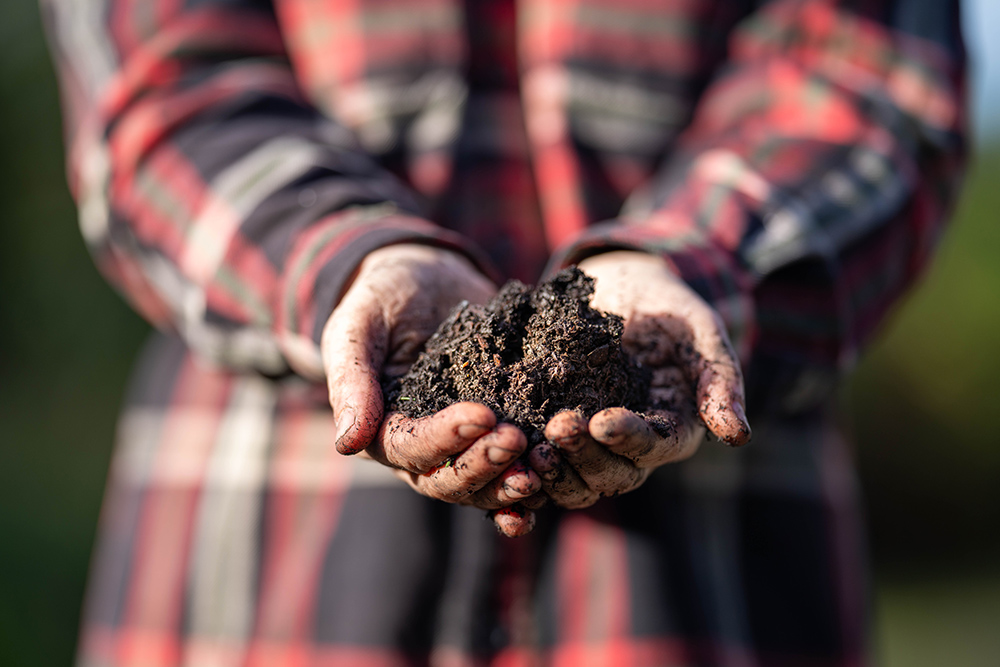
We, as organic community, know that the last two arguments (lower production, higher prices) are false. By taking care of the high number of common values, like soil fertility, biodiversity, climate and health, organic farming is the most productive and secure system in the long run and offers value-inclusive products that help to prevent high damage costs for our environment and health.
Claiming a green face without reduction of pesticides, chemical fertilizer and gentech, is just misleading and foul play
The steal of the nomenclatura is a different chapter. Reality is what we tell each other. Words are crucial for common understanding. If you succeed to frame cost-efficient conventional produced with chemical pesticides as regenerative, then you weaken the story of organic. Partly conventional has succeeded here: originally regenerative was coined by the Rodale Institute in the 1980s. It was introduced as an extra label for… organic! Regenerative organic. Claiming a green face without reduction of pesticides, chemical fertilizer and gentech, is just misleading and foul play.
What makes the situation even more complex is the upcoming practice by mostly organic farmers to put a lot of effort in real regenerative. Like biodynamic farmers they put a lot of effort in soil-fertility and biodiversity. The recent emergence of agroforestry and food forests fits into this type of real regenerative. Some of them don’t feel totally at home in the organic movement, because they consider organic is getting too efficient in some production areas. And in some cases their criticism is true. The organic society should listen carefully to that criticism and bring regenerative home where it belongs: in the centre of organic, regenerative organic.
Author: Bavo van den Idsert, Organic Consultant
Article Originally Published in Bio Eco Actual International Yearbok 2024 – Trends 2025.
Subscribe to Bio Eco Actual Newsletter and be up to date with the latest news from the Organic Sector
Bio Eco Actual, International Organic Newspaper
Read the Bio Eco Actual International Yearbok 2024 – Trends 2025