

p style=”margin: 0 0 18px 0;”>The Court of Justice of the European Union (CJEU) has upheld the use of certified organic Lithothamnium calcareum to provide calcium in organic foods. The judgment of 22 October in the Lima case (C-295/25) recognises it as an organic agricultural ingredient and opens up an opportunity for plant-based drinks.
An ingredient naturally rich in calcium
Lithothamnium calcareum is a calcareous red alga. The dispute concerns the powder obtained from its washed, dried and ground sediments. Its naturally high calcium carbonate content does not, in itself, make it an added mineral or an additive when it is used solely for nutritional purposes.
The Court concludes that certified organic Lithothamnium calcareum powder should be classified as an organic agricultural ingredient, rather than as a mineral, for the purposes of Annex II, Part IV, point 2.2.2(f), of Regulation (EU) 2018/848.
The ruling concerns this certified ingredient; it does not constitute a general authorisation to add any source of calcium to an organic food.
A dispute that has shaped the market
The proceedings stem from a warning issued by the Belgian control body to the brand Lima in 2023 and the subsequent decision by the Flemish administration to require it to stop adding the alga to its organic drinks. The company challenged the decision, and the Belgian Council of State referred the question to the CJEU.
Lima was not the only brand affected: the restriction affected the entire organic plant-based drinks category. In drinks that used the alga to bring the nutritional function of calcium to milk alternatives, Lithothamnium calcareum accounted for less than 5% of the formulation. This was why the sector argued that its inclusion was compatible with organic certification. The rules require at least 95% by weight of the agricultural ingredients to be organic, alongside compliance with production rules and rules on the use of ingredients. Whether the alga is permitted depends on its legal status and certification, as well as the product’s composition.
Unequal conditions across markets and criticism of how the rules were applied
The restrictive interpretation did not reach all markets at the same time, nor did it result in the same adjustment periods. These differences created unequal competitive conditions for operators working in the same category.
The gap between certain certification criteria and the realities of products and markets is a burden often borne by brands, which are responsible for developing their categories and the organic market. Industry sources consulted by Bio Eco Actual question how well some control bodies understood the category’s needs and believe that their decisions harmed businesses. They also point out that the certification system itself needs a viable organic market, and consider that the restriction favoured the interests of the dairy sector and major conventional plant-based drink operators offering calcium-fortified products by weakening an organic alternative. This is the sector’s assessment of the effects of the restriction.
Denis López, Key Account Manager for Spain and Portugal for the brands Natumi and Lima (The Hain Celestial Group), describes the ruling as good news for the sector as a whole. He believes it restores development opportunities for products that combine organic certification with a specific nutritional contribution, allowing businesses to face the future with greater confidence.
For operators, the debate has had consequences for product ranges, labelling and relationships with consumers. Lima and Natumi challenged the restriction through legal appeals. López highlights their sustained defence of these formulations and sees the outcome as a step forward that can benefit the entire organic plant-based drinks category. He explains that his company was confident of securing a favourable ruling.
123RF Limited©baibaz
Calcium as part of the product proposition
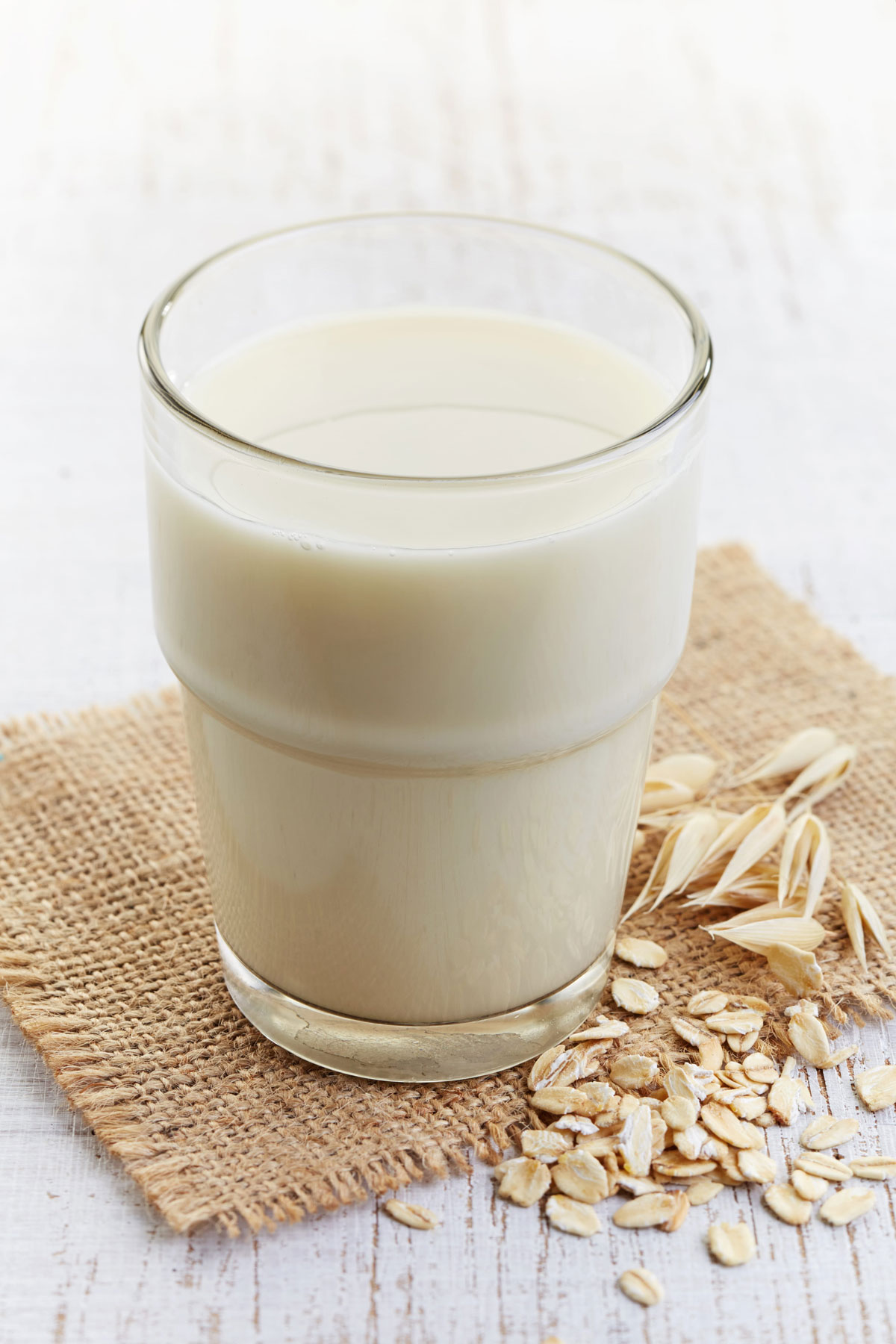
People choose plant-based drinks for different reasons: taste, enjoyment, dietary preferences or the search for an alternative to milk for certain everyday uses. For some shoppers, calcium content is an important factor in their choice.
From this perspective, it is important to distinguish between consuming a product for pleasure and choosing it for a specific nutritional function. Removing an option containing calcium from organic product ranges limits the ability to meet this demand and makes it harder to compete with other alternatives.
Calcium becomes particularly important when a plant-based drink is used as an alternative to, or a replacement for, dairy products. In this context, the nutritional function of calcium carries much more weight than other attributes, such as “gluten-free”, for those seeking an alternative that provides this nutrient.
Following this judgment, the sector has a shared commercial opportunity to resume developing organic drinks with a clear nutritional proposition, combining quality, organic values and functionality.
Economic losses, innovation and consumers who left
Sources consulted by Bio Eco Actual estimate that calcium-fortified drinks accounted for approximately 40% of category sales, with a particularly significant share among leading brands. The decision therefore affected a substantial proportion of organic plant-based drink turnover. These sources estimate that the impact on affected operators amounted to losses of several million euros, and recall that products containing calcium were among the best sellers and were recording double-digit growth.
Sources consulted by Bio Eco Actual estimate that calcium-fortified drinks accounted for approximately 40% of category sales
Alongside lost sales, they point to the brake on innovation and the difficulty of maintaining an organic range that meets specific needs. In their assessment, a quality organic plant-based drink containing calcium and offering a clear nutritional function was penalised despite its commercial appeal.
They also highlight an effect on specialist retailers: when a shop could no longer offer the product its customer wanted, that customer may have had to go elsewhere and choose a product without organic certification. Winning back that purchase will now take work; the court ruling alone will not bring back lost consumers.
Author: Oriol Urrutia, Co-Editor and Political Scientist.
Subscribe to the Bio Eco Actual Newsletter for the latest news from the organic sector
Bio Eco Actual, International Organic Trade Media
Read the Bio Eco Actual International Yearbook 2025 – Trends 2026