

The archipelago is populated with over 123 million inhabitants, while the European Union has 448.4 million inhabitants. With a GDP of 4,941 trillion dollars, Japan is the world’s third-largest economy.

The country’s self-sufficiency rate stands at only 38% in terms of calories, the lowest among the Group of Seven (G7) countries (Germany, Canada, the United States, France, Italy, Japan, the United Kingdom). In 2022, half of the food imports by value came from four trading partners: the United States, the European Union, China, and Australia.
The signing of the Economic Partnership Agreement (EPA) between the European Union and Japan, which came into effect on February 1, 2019, had a positive impact on our trade with the archipelago, especially on wine and dairy exports.
In the first half of 2023, France is the 10th supplier to Japan and the leading European supplier, surpassing Italy and Spain. Over 12 months, French exports reached a record level of €1.46 billion (+12% year-on-year) according to French and Japanese customs.
French exports of agricultural and agri-food products to Japan grew by +5% in the first half of 2023, despite an economically challenging context, according to the Agriculture and Food Department of the regional economic service in Tokyo (SER: Ministry of Economy / Directorate General of the Treasury in France).
With a GDP of 4,941 trillion dollars, Japan is the world’s third-largest economy
“French beverage exports increased by 10% in value year-onyear in the first six months of the year, driven by champagnes (+28% in value, +14% in volume); still wines remained stable in value over the period and declined by 9% in volume. Dairy products also experienced an 18% increase in value, as did milling products (an industrial facility that processes cereals, especially wheat, into flour).”
The Japanese market for cosmetic products, valued at JPY 2,290 billion (approximately €15.6 billion) in 2021, ranks as the third-largest global market behind the United States and China. Despite slight growth, it remains one of the most dynamic markets globally, with consumers always eager for new products. This trade continues to thrive, serving as a reference and even a springboard for the rest of Asia, both for large international corporations and smaller enterprises seeking to export.
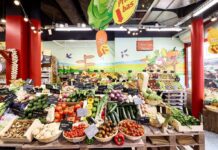
The Japanese primarily consume organic vegetables and rice. These two products account for 85% of organic production and consumption, followed by fresh fruits and tea.
Several supermarkets in Japan, particularly in Tokyo, have started offering organic foods. Seijo Ishii, for example, is a high-end grocery store chain focused on foreign imports and organic products with over 170 stores. Many Seijo Ishii products from abroad are directly imported by Tokyo Europe Trading Co., Ltd, an affiliated company, and do not source from other trading companies. Some major supermarkets like AEON offer sections of organic vegetables. AEON: A Japanese retail company founded in 1970 with 11,917 employees.
The Japanese primarily consume organic vegetables and rice
Mr. Okada, president of the AEON group, had anticipated the development of organic products in Japan and initially created a 50/50 joint venture with Bio C Bon. (Since then, Bio C Bon has been acquired by the Carrefour group for French stores).
In December 2016, the first 100% organic store opened in Japan–Azabu Juban, Minato ward in Tokyo, with the idea that Japanese consumption would change in the years to come. On the theme of “organic in daily life,” with 17 stores in Tokyo and 7 in Kanagawa, as well as an online store delivering nationwide. There are some small networks in Japan, such as F&F, which has expanded in recent years. Their 27 locations extend outside Tokyo (Kanagawa, Chiba, Saitama), and Natural House with 12 directly managed stores and 1 franchised store.
There are independent brands like Crayon House, Horizon Farms, OHSAWA JAPAN, and GAIA Net with its 2 stores.
Online sales: The extensive distribution capabilities of refrigerated transport have allowed the distribution of organic vegetables and other products throughout the country with Amazon Fresh and also the delivery service of Bio Marché, which is a membership-based company that mainly delivers organic vegetables and ingredients (1,500 references) to homes once a week.
Bio Marché is a company of the KEIHAN GROUP: composed of four main segments–transportation, real estate, a distribution business targeting department stores, shopping malls, and other commercial properties. Finally, the leisure and service business, targeting hotel customers, offering, among other things, tourist circuits and cruises.
The aging population and the “metabo” law (short for metabolism) of 2008, which fights against obesity (being overweight in Japan has become “completely illegal”), have made the Japanese increasingly sensitive to health issues. However, organic products are generally perceived as premium by consumers, as in many countries. A healthy diet has always been the primary consumption factor for residents.
Author: Gerard Gontier, French Organic Market Expert
Article Originally Published in Bio Eco Actual International Yearbok 2023 – Trends 2024.
Subscribe to Bio Eco Actual Newsletter and be up to date with the latest news from the Organic Sector
Bio Eco Actual, International Organic Newspaper
Read the Bio Eco Actual International Yearbok 2023 – Trends 2024