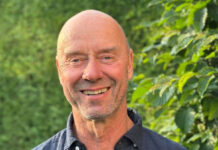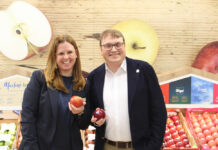

David Caré is the newly appointed Managing Director France HFS and Southern Europe at Ecotone. Ecotone is committed to making organic food mainstream under the motto “food for biodiversity”, and is the first group of food companies in Europe certified as B-Corp. As a mission-driven company, an organic pioneer, and a plant-based food leader, Ecotone’s purpose is deeply rooted in its business model. David shares insights on his expanded responsibilities and the future direction of Ecotone.

Congratulations on your recent appointment as Managing Director France HFS and Southern Europe at Ecotone. How do you feel about this expansion of responsibilities?
It’s an interesting challenge to be able to take the best practices and learnings from the Southern Europe business, and to take from the French HFS great experience and leadership position to also feed into the rest of the business. It’s a fantastic opportunity to find some synergies.
Ecotone is known as the first group of food companies in Europe certified as B-Corp. What does this mean for the company and for you personally?
The group and most of our companies are pioneers in the organic markets and sustainable business. We are part of the companies that have both an environmental and a social impact, and an entire movement of inclusive, equitable and regenerative economies. We want to have a high social and environmental performance and B-Corp has a very rigorous assessment.
We want transparency. Most of our products are organic, clean label and have a very good traceability. B-Corp is a way of going beyond organic and sustainability and then really showing the impact to the world. Just remember that apart from being the first to be certified B-Corp, we are also one of the top food brands globally in terms of score for B-Corp.
Personally, it means coming to work knowing that we are doing the right thing to have a positive impact, not just for today, but for tomorrow.
“Spain has a potentially 1% of the basket today, when you can get up to 6% in the french market”
What have you learned from some of these brands?
They are authentic. They’ve been there from the beginning and they are leading the organic movement. We also have brands that have been consistent and coherent with what the company stands for, which is “food for biodiversity”. Allos, Zonnatura, Bonneterre, Bjorg, Isolabio, Biogran, Ecocesta, Kallo Food… They all have a massive impact on the food system.
How does Ecotone operate and how is that reflected in the different markets?
We have the pioneer brands, most of the time the ones for local consumers, because they are kind of endemic. And we also have fantastic brands in our portfolio that are capable to join them, like Cupper/Clipper.
We have to attract mixers or people that are not yet consuming organic product. And this is done by the multi category approach that we have. We have a very tight factory network that caters for our core categories: tea, cereals and dairy alternatives.
The brands with which Ecotone engages with consumers vary by country. Could you mention some of your key brands in the countries you now oversee?
We have the grocery business and the HFS. In each country there are local players: Biocoop (France), EcorNaturaSì (Italy), Veritas, Herbolario Navarro, Bioconsum (Spain), Celeiro (Portugal). The structure of the market is very similar, very local. This channel is returning to levels of growth that we haven’t seen for a while. The consistency of the market is paying off.
The grocery business has been growing very fast in recent years, and is maintaining a decent level of growth. But consumers have needs. Italians and French are much more organic but also local. In Spain and in Portugal, the local attribute isn’t that relevant. And also, the penetration levels are much lower. Spain has a potentially 1% of the basket today, when you can get up to 6% in the French market. We still have a long way to go in terms of consumption.
“70% of biodiversity loss is due to food production”
What strategies does Ecotone have to make organic food “mainstream”?
What are the biggest challenges Ecotone faces in promoting organic food? We want to reach as many consumers as we can to grow both the organic business and penetration. Organic is already mainstream: you can find options in restaurants, hospitals, airplanes, supermarkets, the specialized channel and online. It’s down to us to continue to push organic as much as we can.
We are all looking for some kind of support from institutions and governments. A reduced VAT could help to reduce the gaps in some price. Even though in some categories, we are now very close to conventional food. We also need a boost to push organic options in canteens, hospitals and all the public places where you could be served food.
70% of biodiversity loss is due to the production. Having a wider consumption of organic food will help us to definitely preserve and improve biodiversity.
What are your goals for Ecotone?
It’s key to have engaged and committed teams. To be sure that we are available in all our core categories with the best offering possible and cater not just for the premium or the more expensive offers, but also some affordable ones. And to work on synergies, to build some strong partnerships.
We are facing an important time in terms of loss of biodiversity and climate change. I’m not sure yet if we have managed to connect the dots between the way we feed ourselves and the impact it has on the planet. This is not just a lobby game, but more a common interest for humankind, and I believe we will make some great progress.
Author: Oriol Urrutia, Bio Eco Actual Co-Editor
Subscribe to Bio Eco Actual Newsletter and be up to date with the latest news from the Organic Sector
Bio Eco Actual, International Organic Newspaper
Read Bio Eco Actual