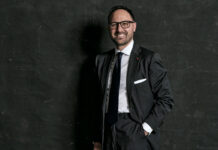

Robert van den Breemer took over as CEO of Horizon and Monki in January 2026. A vegetarian and beekeeper, he grew up on a dairy farm and later spent eight years in intensive animal agriculture. He wants to lead the Dutch organic brands in a “brutally honest and transparent” way. Founded in 1978, the company is directly present in 13 European countries and reaches at least 20 through its wholesale network. Spain, where Horizon has been present since 1993, is one of its longest-standing markets.
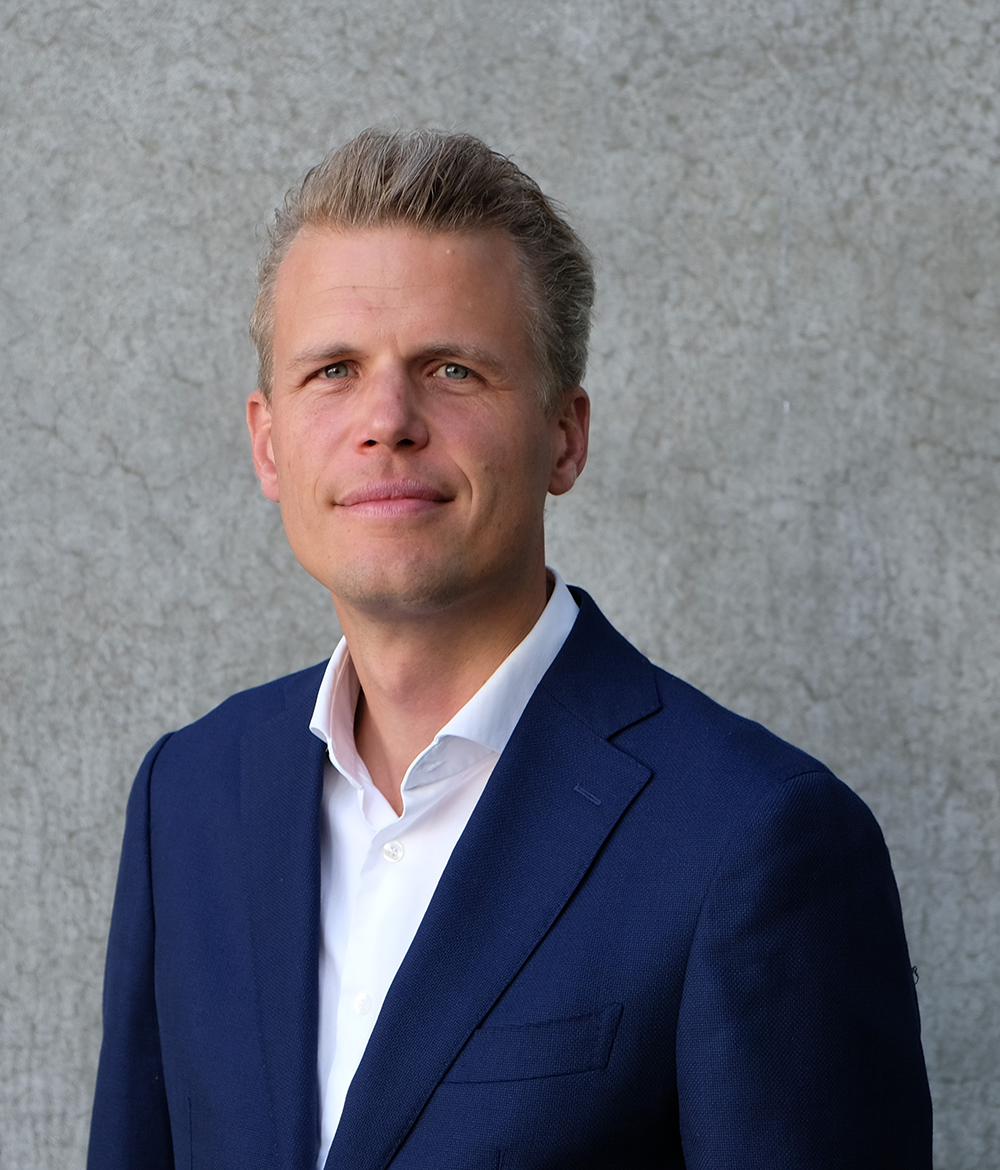
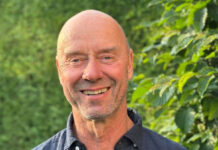
Robert van den Breemer, director of Horizon and Monki.
Monki and Horizon have a long-standing presence in Spain. What does this market represent for you?
I realised that Horizon’s story in Spain started in 1993, when Bio Spirit—known at the time as Luz de Vida—was launched. We go back more than 30 years.
As Horizon, we work with partners, and we have done so for a long time. We buy our almonds from a cooperative in Spain and have done so for 35 to 40 years already. We have an exclusive relationship, and we have relationships like that with many suppliers as well as customers.
I studied in Barcelona for two years, so personally I am quite connected to Spain. I started at Horizon in January. After five weeks, I was at a wedding in Madrid. The two stores next to my hotel had Monki on the shelves. It was exciting to be staying at a hotel in Madrid with our products right next door. It made me quite proud, and it also shows that we indeed go way back in Spain.
You recently became CEO. What attracted you to these brands, and what connects you personally to the organic movement?
What I found fascinating when I was approached for this job is that this brand is really iconic for quite a number of families in the Netherlands and Europe who try to eat organic. For them it really matters. We had it on our own table, so I felt that personally, too. But the moment I announced that I would move to Horizon, four or five people responded to me on LinkedIn with: “Wow, that’s so cool. I’ve had this on our table for decades.”
When we meet customers, there are people who come up to us and say: “We’ve had this for years.” Everybody has a different favourite. Walking around stores where we sell our products, talking to shop owners and customers, and noticing that this is a brand that has been with them for so long—that is special. The quality has always been good.
I come from a dairy farm and worked in the intensive animal agriculture industry for eight years. There I realised that we need to feed animals more sustainably, but for me that was not enough. We also need to eat less meat in general. We need to eat more plants. What I found especially difficult in that industry is that there are lots of statements about “feeding the future”, but the actual action is relatively limited.
How broad is the brands’ presence in Europe today?
We have direct retailer or wholesaler relationships in 13 countries in Europe. Also in As in Spainwe work with wholesalers. There are lots of individual organic stores, in all kinds of shapes and sizes, that order via these wholesalers, therefore all in all we are probably present in at least 20 European countries.
Horizon, from the start, has been organic. There is no question. It is just organic. Now they call that clean label, but it has been nuts, seeds, sometimes a combination of seeds or nuts, and here and there a little bit of salt. That is it. There is no: “We found a market niche, we are going to build a nice website and strong stories, and then—oh yes—we need a product.” We started with a product, a vision and an idea of how the world should look, and then built a brand around it, not the other way around. That is what I really like about the brand.
“We started with a product, a vision and an idea of how the world should look, and then built a brand around it, not the other way around”
I want to spend my time working for companies that make the world the way I would like to see it: more plant-based and animal-friendly. I am a vegetarian. We have a vegetable garden next to our house. I am involved in quite a few organisations in the Netherlands, and I am a beekeeper. This weekend I am going to harvest some honey—not a lot, because in the end it is there for the bees.
When you learn about nature and food, you start to understand how extremely complex nature is and how the whole system functions, and how we as humans have manipulated that to get the most output. When you have your own vegetable garden, when you know bees are dying because of pesticides, then going the organic route makes complete sense. It also feels like I am contributing to the world I want to see. When my kids ask me, ten or twenty years from now, “We saw climate change and everything that happened—what did you do?”, I will at least be able to tell them a good story.
What should people expect from your leadership and from the brands’ next chapter?
We have been active since 1978, and quality has always been most important to us: the quality of our products, but also the quality of the jars, the packaging and the transport—all of that matters enormously.
There was a time when shop owners were very happy if Horizon was on their shelves. Right now there is much more competition. More people should eat organic, and they should have more alternatives. But it also means that we need to do a lot more to make customers understand: you have all these options, so why should you go for Monki or Horizon? Why have your parents, or friends of your parents, been buying them for a long time, and why should you keep doing that?
We need to explain more that the product we make is clean label. It is nature that is doing the work. Being a beekeeper, I see that nature does it. All we do is get a few of the fruits and use them. Our suppliers know how to grow, harvest and process them really well. We know how to do the drying and the grinding to get the best nut paste or seed paste out of it. That is what we have been working on with our suppliers for decades. It is an important part, but in the end it is nature that is doing the work. Nature, water and biodiversity are central to everything we do.
In the end, you and I can call up people, buy organic nuts, buy a grinder and start producing organic nut paste. We can all do that. So you need to differentiate, and one way you do that is by being totally, brutally honest and transparent about what you do. We have been that for almost 50 years. We need to talk about that more, and for me it makes complete sense to continue doing so.
Organic remains more expensive than conventional food. How do you view that challenge?
Organic food is indeed expensive. For me, there are two main factors. On the one hand, conventional food is too cheap. We spend roughly €60 billion a year in Europe on all kinds of subsidies, and only a small share of that—well under 5%—goes to organic. We spend a lot of money subsidising conventional foods, and that money should go to food that is actually sustainable and viable in the longer term.
On the other hand, organic is relatively small. It is difficult to produce. It requires a farmer who knows what they are doing and how to intervene without simply spraying pesticides. You cannot take shortcuts. For decades, the money invested in agriculture—in pesticide development, harvesting equipment, seeding and weeding machinery—has mainly gone into the conventional farming system. The organic system is relatively small and has not attracted sufficient investment to make production very efficient.
Organic requires different machinery and a different way of working. That takes time to develop, and while the market remains small, there is limited money being generated and limited investment coming in. But we now see weeding based on lasers and machinery that can drive autonomously. You can get a field free of weeds without using pesticides. Once that equipment improves, organic will be cheaper to produce.
The same applies to the supply chain. To have fully dedicated, separated organic storage tanks, trucks and processing lines, you need a certain volume. Once organic volume grows, it becomes easier to dedicate a supply chain to organic products, which makes things cheaper. So, is it expensive? Yes, but that gap is narrowing, and conventional food needs to become more expensive. The two will get closer to each other.
How do your supplier relationships and ingredient choices distinguish Horizon and Monki?
We have been buying our dried mangoes in Burkina Faso from the same supplier for more than 25 years. With the almonds, it is 35-40 years. We go back a long time. We support these cooperatives and local programmes. That means we buy their raw material, sometimes at prices that we believe are above the wider market rate. We do not move away from a supplier because it has a difficult time one year. We work long term.
We work with a company that dry roasts our nuts in the Netherlands. They had a fire a long time ago, and we stayed with them. I believe Gaston, our founder, also helped replace some of their machinery to help them get back into production. That is how we work.
“It is nature that is doing the work”
There are a lot of companies that can make organic cashew paste or organic almond paste. We urge people to try the different ones. We buy the best, highest-quality nuts. For many products, we purchase certain varieties of almonds, cashews or peanuts that give the best nut taste. Consumers should taste that difference.
In Spain, we want to be much more active: visit the market, talk to wholesalers, shop owners and customers, and let people try the products. In the end, it is all about taste.
Nut and seed pastes are familiar products, but their uses are still not always understood. Where do you see room for growth?
If you buy pistachio paste, a small jar can be twelve euros. That is a lot of money. You need to treat it as a delicacy. I am a relatively standard farmer’s boy from the Netherlands: I put nut paste on my bread, and that is it. But once you start trying tahini in soups or sauces, or dipping dates into hazelnut paste and eating them with a little bit of pistachio, that is a fantastic snack.
There are many more opportunities to use these products. If you put half a centimetre thick on your sandwich, then it is relatively expensive. But if you use it in many more ways, it gives you a lot of flavour and a good story behind it.
Both brands are introducing a refreshed visual identity and new packaging. What are the objectives?
Two weeks ago I visited the artist who has developed most of the labels, pictures and drawings we put on our jars. He is 78 now and has been there since the very start, for 40 years. That is the kind of relationship we build and maintain.
Horizon’s packaging is relatively calm and structured, whereas Monki uses lots of colours and letters and is very busy. That is one thing we want to change a little bit. At the same time, one of the ideas behind Monki’s packaging has always been to surprise customers. On many Monki jars there is a combination of leaves and nuts, and faces can be seen—eyes, a nose and a smile—but you need to look for them. The idea was that some jars would be on the table for a year and, at some point, a child would look at the jar and say: “Hey, I see a face.” It needs to create a little surprise, and I like that idea.
We want to keep that, while simplifying the packaging a little so that it becomes clearer what the product is and a bit more modern. Our brand has been around for so long that we do not want to alienate our loyal customers. We want to keep the good of what we have always been doing, but modernise it a little.
What happens at the company’s facilities in IJsselstein, and how do you manage quality and traceability?
It all started in 1978 with Gaston buying tahini, putting it in jars and selling it. In 1985, we started in IJsselstein, near Utrecht. We buy nuts, seeds and dried fruits from all over the world and have them roasted if needed. They then come to IJsselstein, where we have two production lines.
One is a nut-paste production line. If needed, we dry certain nuts a little bit. We grind them once, twice or three times depending on what we make, and cut them if needed for a crunchy product. Then we have a filling machine: the jars are filled, we put a best-before date and a label on them, and pack them in boxes.
The other is a packaging line for nuts, seeds and dried fruit. We pack our own products, mainly in consumer formats. That is also one of the things we want to bring to the Spanish market alongside the nut pastes: a selection of packaged products under the Monki brand.
“We do not move away from a supplier because it has a difficult year. We work long term”
Our quality team has been all over the world visiting suppliers and farmers: sesame producers in Bolivia, peanut suppliers in China, and hazelnut and apricot producers in Turkey. Gaston, our founder, set up several projects and a foundation in Turkey to develop organic apricots and hazelnuts. When he started, organic product was not always available in sufficient quantity or variety, so we started projects and a foundation to develop it.
One of our quality colleagues has been with us for 35 years and has visited all the suppliers. He is really our conscience. Constantly checking the nuts that come in—whether they are good enough and meet our expectations—is critically important to us.
Beyond individual brands, what is Horizon and Monki’s broader ambition for the organic sector?
Deep down, what we want is for the organic food business in general to grow. I would rather have people buying nut paste from Horizon than from another brand, but in the end I first want them to buy organic instead of conventional. That is a connecting factor in the organic market.
We are going to spend a day with a large part of the Horizon team to talk about who we want to be, what our ideal is and what we want to do. Clearly, I want our brand to grow. I want people to buy more organic peanuts, nut paste, cashews, almonds and hazelnuts. But in the end, we want organic to become available for everyone. That is our mission. If Horizon grows a bit less but the market grows a lot and we can support that, that is important to us.
What role do you see Spain playing in the next phase?
Spain is critically important to us. It has not been getting the attention it should have. The focus is there from Kirstin Veldkamp (manager of the Spanish market at Horizon and Monki), but also from me. I am quite internally focused right now, but definitely this last quarter of the year—and especially next year—I will focus more externally and visit Spain more often to develop the market.
Author: Oriol Urrutia, Co-Editor and Political Scientist.
Subscribe to Bio Eco Actual Newsletter and be up to date with the latest news from the Organic Sector
Bio Eco Actual, International Organic Trade Media
Read the Bio Eco Actual International Yearbok 2025 – Trends 2026