
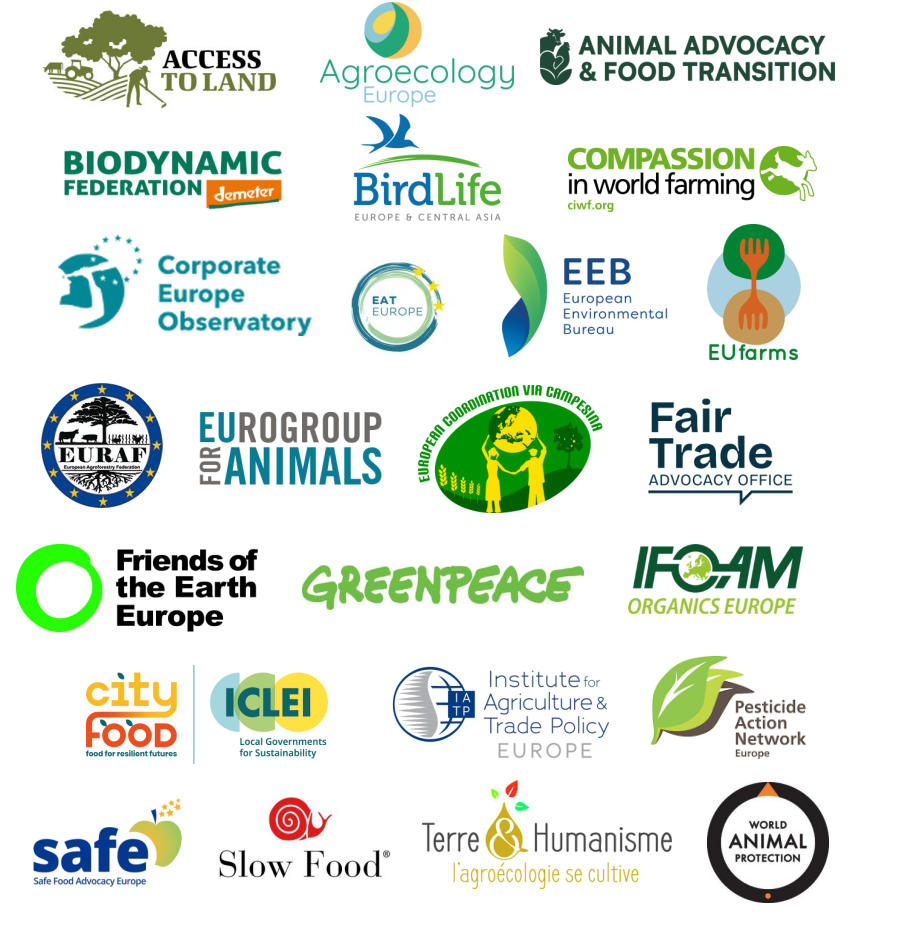
IFOAM Organics Europe together with farmer’s organisations, environmental NGOs and civil society actors have published a joint statement warning against the misleading use of «regenerative» agriculture in corporate branding and EU policy initiatives.
The signatories caution that regenerative claims risk diverting political attention, public resources and market recognition away from genuinely transformative and publicly accountable food system solutions already being implemented across Europe.
The statement warns that “what is called «regenerative» can include highly degenerative practices masked by a few cosmetic measures.” The signatories also stress that millions of farmers and territorial food actors are already building resilient food systems rooted in agroecological and organic principles, delivering concrete environmental and social benefits through credible, transparent and accountable approaches.
“Organic farming has for decades delivered on the principles now broadly also associated with the regeneration of our soils and agro-ecosystem, through a legally defined, holistic and publicly verified framework. The concern lies with undefined narratives that allow input-intensive models, continued reliance on synthetic pesticides and fertilisers, or weak environmental practices to be marketed as sustainability, and not with farmers who are genuinely improving soil health, biodiversity and resilience. Such narratives risk undermining both farmers’ efforts and consumer trust,” said Jan Plagge, President of IFOAM Organics Europe.
The joint statement further highlights that “In EU policy documents and debates, a diffuse concept of «regenerative» agriculture is increasingly being used to divert policy attention and resources from truly transformative solutions.”
“The issue is not whether farmers use the word regenerative, but whether EU policy and markets reward real transformation or vague claims. Public support, sustainability reporting and corporate sourcing strategies must be based on clear criteria, public accountability and verifiable benefits for ecosystems. Organic and agroecological systems already offer credible pathways for this transition; they should not be weakened by undefined concepts that allow business-as-usual practices to be rebranded as sustainability,” said Eduardo Cuoco, Director of IFOAM Organics Europe.
The signatories call on EU policymakers and market actors to support coherent transition pathways, while strengthening environmental standards and consumer trust. “Europe must ensure that actions speak louder than words and that future transitions remain credible, transparent, grounded in the public interest, and anchored in verifiable and publicly governed approaches”, the statement concludes.
- Further information: www.organicseurope.bio
Subscribe to Bio Eco Actual Newsletter and be up to date with the latest news from the Organic Sector
Bio Eco Actual, International Organic Newspaper
Read the Bio Eco Actual International Yearbok 2025 – Trends 2026