
While the organic consumption market is finally returning to growth (+3.6% in 2025), French organic production is eroding. For the first time, the number of organic farms is falling, while land areas have declined for the third consecutive year.
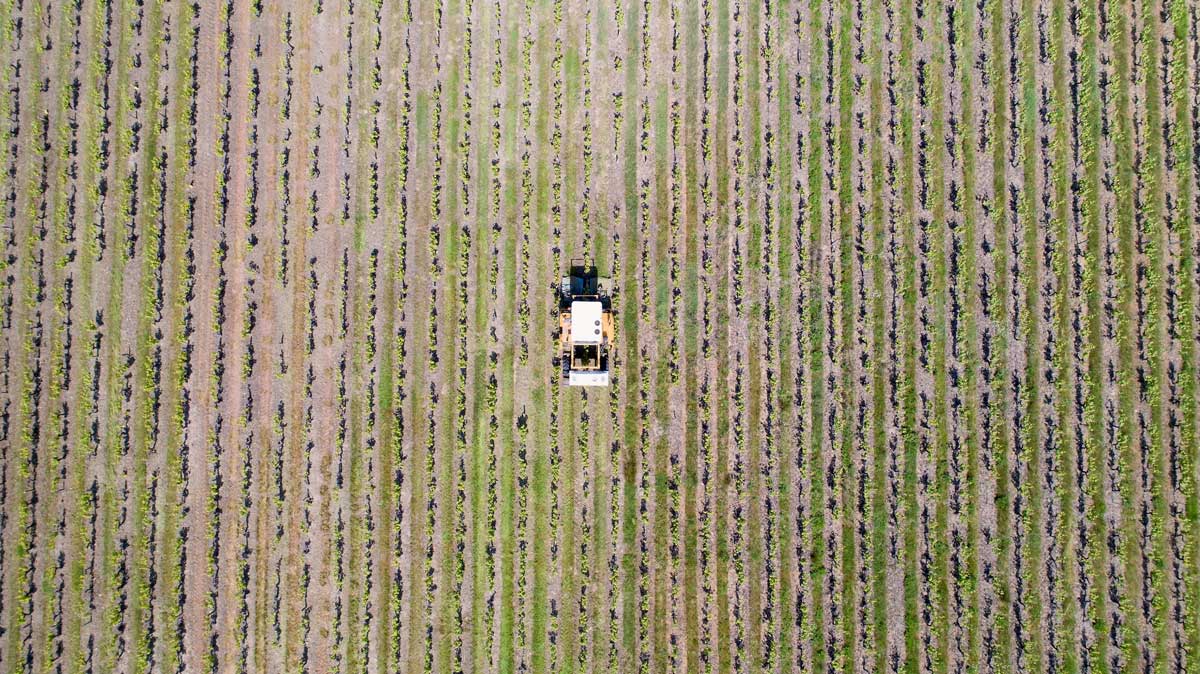
Between deconversions driven by the crisis, the erosion of prices paid to producers and the demographic urgency, the primary link in the chain is sounding the alarm. While consumption is picking up again, the issue now is to support production so that supply can meet demand.
Bruno Martel (president) and Laurence Hohn (deputy director) of l’Agence Bio presented, on Tuesday 16 June, the organic market figures for 2025. While they confirmed the general recovery of organic consumption in France, they recalled “the need to translate this consumer expectation into a concrete collective momentum, to reassure our current producers, build confidence and encourage new installations and conversions. This is a sine qua non condition for guaranteeing our food sovereignty”.
An unprecedented decline in the number of organic farms
Because while consumption is picking up again, production continues to contract. For the third consecutive year, the utilised agricultural area (UAA) farmed organically recorded a fall of -1.1%, standing at 2.69 million hectares (i.e. 10% of the national UAA). Even more worrying, a historic threshold has been crossed: for the first time, the network has recorded a negative balance in the number of farms committed to organic production, with a decline of -1.3% to 61,159 holdings. Although the organic chain is, overall, holding up better than conventional agriculture (where the total number of farms is falling by -3.6%), the warning signal is unequivocal.

Laurence Hohn and Bruno Martel (L’Agence Bio).
Three years of crisis have left deep scars
For Fnab (Fédération Nationale d’Agriculture Biologique) and FOREBio (Fédération des Organisations Économiques de Producteurs 100 % Bio), the optimism shown by the commercial link does not hide the reality on the ground. The losses in agricultural production potential since the historic peak of 2022 (when France had 2.82 million hectares under organic farming) are enormous. FOREBio presents a severe quantified assessment of these three years of abandonment:
- Arable crops and vegetables : Organic cereal areas have fallen by -15%, dry pulses by -19.4% and fresh vegetables by -11.9% compared with 2022.
- Livestock farming : For the first time in the history of French organic production, livestock herds have recorded a general decline across all species between 2022 and 2025. The cattle herd is down -10%, sheep are down -4% and pigs have suffered a spectacular fall of -33%.
L’Agence Bio notes that the chains suffering the greatest net losses of farms in 2025 are dairy cattle, viticulture, perfume, aromatic and medicinal plants (PPAM), beef cattle, eggs and poultry meat.
The risk of a future shortage of volumes?
Today, 72% of the organic food consumed in France is produced within the country (a figure that rises to 84% if non-substitutable exotic products such as coffee, cocoa or bananas are excluded). Imports are at their lowest level since 2017. However, professionals in the primary link are warning: if consumption accelerates while production potential continues to shrink, French chains will no longer be able to meet demand. FOREBio is already reporting supply tensions in several markets, especially organic eggs, butter and beef. For the organisation, the risk is no longer theoretical. Some chains could run out of volumes after having taken several decades to become structured. “Signs of market recovery will not be enough. […] Everything is at stake now”, insists Clément Aribaud, vice-president of FOREBio.

According to Fnab, “the economic incentive to produce organically has never been so weak”. The profitability and viability of organic farms have historically rested on a tripod: reduced costs, sales prices that are more remunerative than in conventional farming, and incentive-based public support. However, since 2022, these three pillars have deteriorated simultaneously.
The challenge of generational renewal
The survey carried out by l’Agence Bio among farmers who abandoned organic production in 2025 reveals that in one third of cases (33%) it was a complete cessation of agricultural activity, half of which corresponded to retirements. The average age of organic farm managers is 48, and new installations are taking place increasingly late (average age of 40). The lack of economic visibility is blocking generational renewal. FOREBio even refers to a “demographic time bomb”. It is true that organic farming remains attractive among young people setting up: nearly 30% of beneficiaries of the Dotation Jeunes Agriculteurs have an organic activity. But this is still not enough to offset departures. For FOREBio, “the organic production model inspires vocations that must be supported to ensure the renewal of French farms”.
Some rays of hope for 2026?
Not everything is gloomy. L’Agence Bio highlights positive leading indicators at the start of 2026: in May 2026, the number of new committed farms increased compared with previous years, especially in arable crops, poultry and dairy cattle. In addition, areas in the first year of conversion (C1) rebounded strongly in 2025 for arable crops (+24%) and fresh vegetables (+44%).
The urgent and imperative expectations of the primary link
The organisations in the primary link agree on one point: to relaunch production on a lasting basis, producers need visibility. This requires sustainable market outlets, better enforcement of Egalim, reliable production cost indicators, reinforced public support and long-term commitments between the different links in the chain.
To stop the haemorrhage and restore visibility for producers, Fnab and FOREBio are putting forward clear demands to public authorities and the commercial link:
- Strict application of the EGalim law in organic chains. This implies the mandatory integration of reliable production cost indicators in the setting of purchase prices, guaranteeing protective multi-year contracts for the primary link.
- Revaluation of public support. The unions are calling for an increase in the organic eco-scheme (in particular through the reopening of the remaining conversion budget funds validated by the European Commission), as well as the consolidation of the organic tax credit, the return of maintenance aid in the future CAP and a fixed annual budget of 15 million euros for five years for the Fonds Avenir Bio (Editor’s note: compared with €8 million in 2026).
- Regulation and market tools. The development of regulation mechanisms adapted to market variations is being requested (aid for downgrading, crisis storage), inspired by tools already in place in the conventional sector, within the framework of the revision of the CMO regulation.
- Prioritising organic production for generational renewal. Creating an “organic priority” for farm succession projects already committed to organic farming.
The challenge for organic farming is no longer only to win consumers back. It is also to recreate the conditions for farmers to recommit to this mode of production. Because without producers, there can be no real lasting rebound in the French organic market.
The article Bio : l’inquiétant paradoxe d’une production en recul face à une consommation qui redémarre was originally published in Bio Linéaires, the reference medium for the organic sector in France.

Subscribe to Bio Eco Actual Newsletter and be up to date with the latest news from the Organic Sector
Bio Eco Actual, International Organic Trade Media
Read the Bio Eco Actual International Yearbok 2025 – Trends 2026